Learn Electric Cars

LEC Team

Volvo EX90 Electric SUV Made in USA

Volvo Starts Production of EX90 Electric SUV in the U.S.

The Swedish auto giant originally planned on starting manufacturing in the U.S. last year but software bugs delayed it. The production of the Volvo EX90 flagship electric SUV has eventually commenced in the U.S. EX90 is a three-row electric SUV with 6- and 7-seat configurations. The manufacturing plant is situated just outside Charleston, South Carolina in the U.S. It has a capacity to build up to 150,000 cars per year. This facility commenced operations in the summer of 2018. Along with the EX90 electric SUV, Volvo makes the S60 sedan here. You might also like: Hyundai To Use Carbon Fiber In Its EVs For Improved Performance Volvo EX90 Electric SUV Starts Production in U.S. In the recent times, the Swedish car marque made extensive investments in this facility. As a result, the body shop and paint shop have been renewed and expanded substantially. In addition to that, the plant is now also equipped with a state-of-the-art battery pack production line. Note that the EX90 electric SUV is designed to be the safest Volvo car ever. It is based on the next generation, born-electric EV technology base. The first EX90 which rolled off the production line bears the Denim Blue color and will get delivered later this year. Volvo Chief Executive, Jim Rowan commented, “The fully electric Volvo EX90 is the start of a new era for Volvo Cars – a new era for safety, sustainability and human-centric technology. The EX90 is proudly manufactured in the USA and reflects our long-term commitment to our people in South Carolina and the broader US market.” You might also like: 2024 Chevy Equinox EV Offers Incredible Value For Money Volvo EX90 Electric SUV – Specs and Price The flagship electric SUV from Volvo comes in two variants – Twin Motor and Twin Motor Performance. These come in 6- and 7-seat configurations called Plus 7 Seat, Plus 6 Seat, Ultra 7 Seat and Ultra 6 Seat. In the standard Twin Motor guise, the two electric motors produce a respectable 402 hp and 568 lb-ft (769 Nm), while in the Performance Twin Motor version, these figures escalate to a healthy 496 hp and 671 lb-ft (909 Nm). With both trims, there is a 111 kWh battery pack as standard. The regular Twin Motor guise can do a 0 to 60 mph (96 kmph) sprint in just 5.7 seconds, while in the Performance avatar, it achieves the same feat in a handy 4.7 seconds. Interestingly, both these versions offer a usable range of 300 miles (483 km) on a single charge. The base Twin Motor starts at $76,695. On the other hand, the Performance Twin Motor ranges from $81,695 and tops out at $86,545. Specs Volvo EX90 Electric SUV Battery 111 kWh Range 300 miles (483 km) Drivetrain Twin-Motor AWD Power 402 hp – 496 hp Torque 568 lb-ft (769 Nm) – 671 lb-ft (909 Nm) Acc. (0-60 mph / 96 kmph) 5.7 seconds & 4.7 seconds Specs You might also like: Jeep Plans To Increase Its PHEV Sales By 50% In 2024 Learn Electric Cars Says Volvo Cars sold 10,153 units in the U.S. in May this year. This constitutes of 3,914 (28.3%) plug-in cars. Interestingly, this number is 29% more than the same month last year. However, out of these plug-in cars, 3,617 (92%) units were plug-in hybrids. Unfortunately, Volvo has just sold 1,595 pure EVs this year so far. That is evidently one area where the Swedish auto giant wants to improve. Hence, the EX90! We shall keep an eye out for how well the customers embrace the flagship electric SUV from Volvo once deliveries commence later this year.
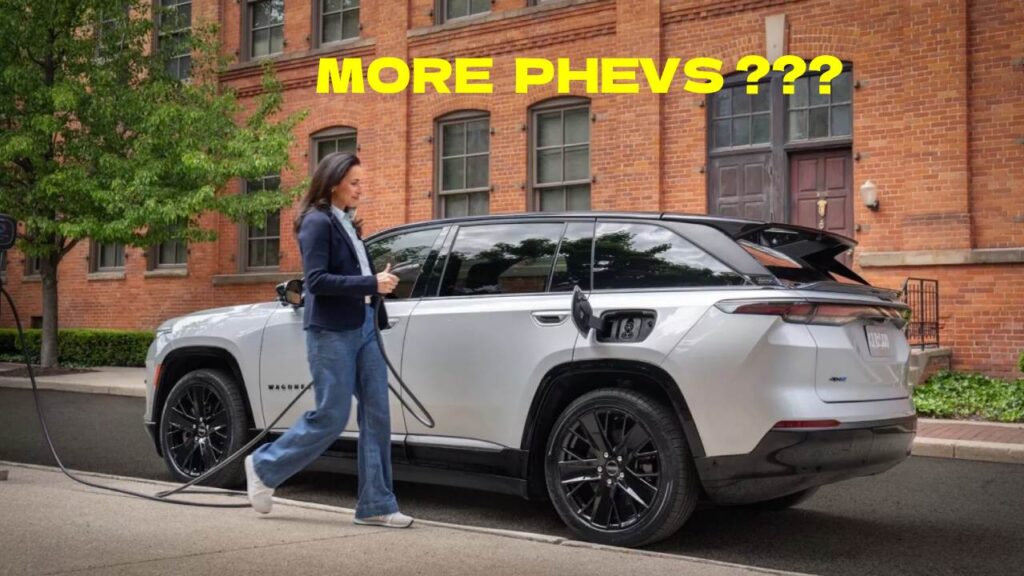
Jeep Plans More PHEVs

Jeep Plans To Increase Its PHEV Sales By 50% In 2024

The American SUV maker is bullish not just on plug-in hybrids, but also on traditional hybrids going forward. Jeep is anticipating the sales of its plug-in hybrid vehicles (PHEV) by a cool 50% this year itself. That is quite ambitious considering its Wrangler 4xe is already the best-selling plug-in hybrid in the U.S. since Q2 2021. What is more fascinating is the fact that Jeep makes some of the most successful and hardcore off-roading vehicles on the planet. When we talk about electrification, this is not the first segment that comes to mind. However, come to think of it, the assistance by the electric components toward the powertrain can be quite handy on such vehicles. That is why the Wrangler 4xe is so successful. Jeep wants to build on that and launch the 4xe iterations of the Wrangler and Grand Cherokee as well. In fact, Jeep CEO Antonio Filosa has already confirmed the Gladiator 4xe for 2025. Hence, the future of Jeep certainly looks overtly hybrid, if not fully electric. You might also like: VW CEO Says PHEVs Are Necessary Transitional Technology Jeep Wants More PHEV Sales Talking about PHEV sales by Jeep last year (2023), it managed to sell a decent 113,113 units in the U.S. However, Antonio has kept his expectations significantly high this year at around 160,000-170,000 units. That is over 50% surge if the American SUV giant is able to achieve it. Considering the recent slowdown in pure EV sales, more customers might be looking at PHEVs. Therefore, this number might not be out of the realm of possibility. The Gladiator 4xe is expected to carry a 2.0-liter 4-cylinder turbo petrol engine with a 17.3 kWh Lithium-ion battery pack and an electric motor. The combined output with this configuration is a healthy 375 hp (280 kW) and 470 lb-ft (637 Nm) of peak power and torque. Being a true PHEV, the pure electric range is a usable 21 miles (34 km). This is the same engine as the Wrangler. Additionally, Jeep revealed plans to introduce the 4xe variants of the Wagoneer and Grand Wagoneer by 2025 as well. As a matter of fact, they will come with a range-extended powertrain, something becoming quite popular with large SUVs lately. It could borrow the configuration from the Ram 1500 Ramcharger. This setup includes a ginormous 92 kWh battery pack along with a 3.6-liter V6 engine which acts as a generator and two electric motors for an all-wheel-drive configuration. The result is a respectable 663 hp (494 kW) and 615 lb-ft (833 Nm) of peak power and torque. However, the main attraction is the range of up to 690 miles (1,110 km). In addition to PHEVs and EVs, the company also remains interested in traditional hybrid powertrains. In fact, we might see one on the redesigned Cherokee. Anyway, the future of Jeep SUVs is certainly hybrid. You might also like: How Are EREVs Different From BEVs, PHEVs or HEVs? Learn Electric Cars Says We know that Jeep has been massively bullish about plug-in hybrids for a long time. Its remarkable sales have further boosted its confidence and they are a testament to the customers’ demands. While potential buyers expect plug-in hybrids to offer a much more useable range to run daily errands, it doesn’t seem to be that big of a problem with hardcore off-roading SUVs. I guess the applications and hence, the expectations are different. That could be the reason for these sales. As Jeep prepares to introduce hybrid powertrains in more segments, a wider range of potential buyers will emerge. Hence, the estimation of selling around 170,000 PHEVs in 2024 might not be unfounded. Many industry experts are anyway looking at PHEVs are more viable options than pure EVs, at least in the near future. Let us see the response of the consumers as more PHEVs from Jeep arrive in the market.

Hyundai Ioniq 5 N TA

Hyundai To Use Carbon Fiber In Its EVs For Improved Performance

The Korean auto giant joins hands with Toray Industries, Inc. to develop advanced materials for a new era of mobility. The future Hyundai EVs stand to benefit from advanced materials including carbon fiber, for enhanced performance. Hyundai Motor Company has relentlessly been working toward embracing all facets of electric mobility. This includes sustainability, racing, affordability, technology, connectivity and now material science. The aim of the Korean car marque is clear, “Hyundai Motor Group aims to leverage this strategic partnership to strengthen its position as a global leader in mobility solutions”, says Chang Song, Hyundai’s President. You might also like: Hyundai Ioniq 6 N To Be A Meaner Avatar Of The Ioniq 5 N Future Hyundai EVs To Use Carbon Fiber As per the official press release from Hyundai, the Korean auto giant has signed an agreement for strategic cooperation with Toray Industries, Inc., a pioneer in carbon fiber and composite material technology, to advance material innovation for a new era of mobility. For the unversed, Toray Industries are experts in fibers and textiles, performance chemicals, carbon fiber composite materials, environmental engineering and life science. This partnership is crucial for Hyundai Motor Group’s future mobility strategy. Hyundai is adopting a comprehensive approach by pursuing fundamental advancements in material technology, in addition to electrification and software-defined vehicles (SDVs). President Chang Song concluded by saying, “By combining our automotive expertise with Toray Group’s material technology prowess, we aim to become the first mover and gain a competitive edge in the global market.” Toray Industries Toray Group is the global leader in carbon fiber which is a key material in automotive and aviation. The prime qualities of carbon fiber, as many of you would already be aware of, include lightweight, high strength, and heat resistance properties. Toray Industries President, Mitsuo Ohya remarked, “Toray Industries has developed innovative technology and materials focusing on electrification and sustainability to address the needs of customers in the constantly evolving automotive industry. We are happy to partner with Hyundai Motor Group to continue this innovation.” Among other key alliances of Toray Industries are with a California-based Joby Aviation. As a part of this partnership, Joby Aviation will utilize carbon fiber from Toray Industries to create its upcoming all-electric air taxi. In addition to that, the other prominent partnership is with Lilium. It is a German aerospace firm. In this case, the carbon fiber composite will be used on its fully electric five-seater jet. The Lilium Jet is an emissions-free aircraft that can take off and land vertically. It is designed to provide high-speed regional connections of up to 300 km in under 60 minutes. The aircraft’s primary structures, such as the fuselage, wings and flaps will all be made from carbon fiber. You might also like: Hyundai Ioniq 5 N eN1 Cup Car Marks Brand’s Entry Into EV Racing Learn Electric Cars Says Hyundai Motor Group is working in all directions to capitalize on every major technological breakthrough to ensure that its future EVs are much superior to their already impressive electric cars. Using lightweight materials will certainly boost range and performance. In fact, you must already know that supercars have been using carbon fiber elements for decades now. Reduction in weight always boosts the efficiency of automobiles. Hyundai aims to bring that aspect to its EVs, hopefully at a much more affordable price point. We also know that Hyundai has been creating the racing EVs after the Ioniq 5 N. Hence, it already offers re-tuned versions of its existing EVs. If it starts using carbon fiber elements, the regular EVs will get even more efficient. I shall keep an eye out for further developments in this regard as they unfold.

2024 Chevy Equinox EV Front Three Quarters

2024 Chevy Equinox EV Offers Incredible Value For Money

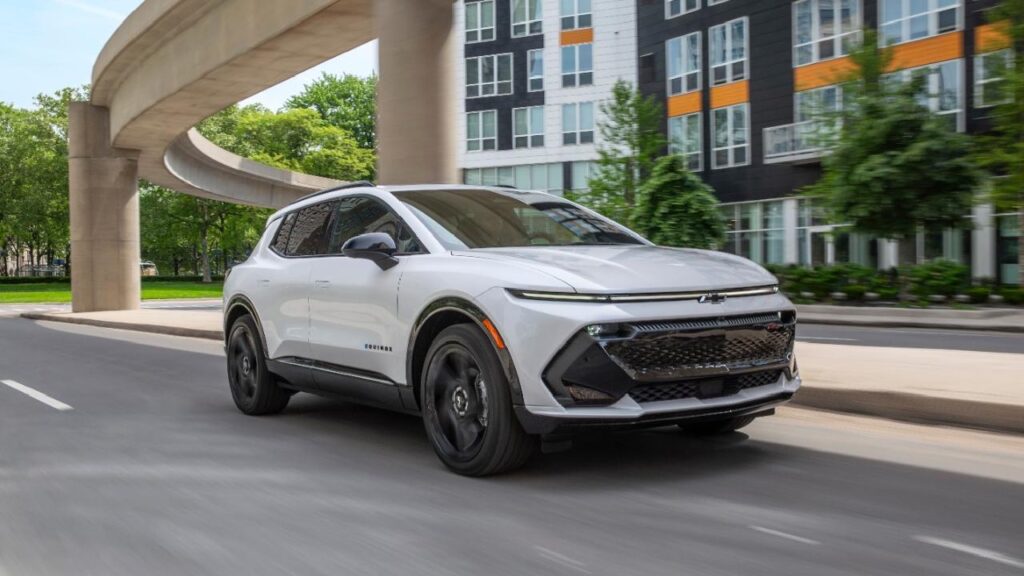
The new Equinox EV is touted to be the best electric car from Chevrolet so far in terms of affordability, features, range and performance. The 2024 Chevy Equinox EV might well turn out to be the most enticing offering from the American auto giant for the masses. With EV sales seemingly plateauing in the U.S. and China in recent times, affordable EVs look like the only solution to spur demand. Price plays the deciding role in car sales in the mass market. Hence, that is exactly what most legacy carmakers are eyeing for lately. With the base Equinox EV LT starting at $34,995 MSRP before tax credits, Chevrolet might just have a winner on its hands. You might also like: Huawei and JAC Pledge To Launch Maybach and Rolls Royce Rival 2024 Chevy Equinox EV – Specs, Range and Charging The electric vehicle uses the famed Ultium platform. It gets two variant ranges – LT and RS. Both these get the option of either a single-motor FWD or a dual-motor AWD configuration. The standard FWD version generates a decent 213 hp and 236 lb-ft (320 Nm) of max power and torque. On the other hand, the performance-focused AWD trim produces 288 hp and 333 lb-ft (451 Nm) of peak power and torque. The electric mill draws power from an 85 kWh Lithium-ion battery. It offers a rather healthy EPA-estimated range of 319 miles (513 km) on a single charge in FWD trim and 285 miles (459 km) in the AWD version. Using a standard 11.5 kW Level 2 AC charger, the 2024 Chevrolet Equinox EV can add up to 36 miles (58 km) of range every hour. On the other hand, the 150 kW DC fast charger can juice up the battery with around 77 miles (124 km) of range in just 10 minutes. The battery comes with an 8-year/100,000-mile (160,934 km) limited warranty. Note that the base LT trim will be available to order later in the year. Specs 2024 Chevrolet Equinox EV Battery 85 kWh Drivetrain FWD / AWD Platform Ultium Power (FWD / AWD) 213 hp / 288 hp Torque (FWD / AWD) 236 lb-ft (320 Nm) / 333 lb-ft (451 Nm) Range (FWD / AWD) 319 miles (513 km) / 285 miles (459 km) Level 2 AC Charging 36 miles (58 km) per hour 150 kW DC Fast Charging 77 miles (124 km) in 10 minutes Specs You might also like: Latest Spotting of 2025 Rivian R1S Reveals New Design Details 2024 Chevy Equinox EV – Features I feel the biggest attraction of this EV is what it offers at this price range. The list of the latest tech, connectivity, convenience, safety and comfort amenities is rather extensive. In fact, the soft-touch materials inside the cabin definitely don’t make you feel like you are sitting in a budget car at all. The top features include: Dimensions and Storage Chevy Equinox EV is a mid-size electric SUV and its dimensions encapsulate that accordingly. It has a length of 190.55 inches (4,840 mm) which translates to a wheelbase of 116.3 inches (2,954 mm). That is quite impressive for an EV of this price and segment. The EPA cargo volume is a respectable 26.4 cu.ft. (747.6 litre) behind the second-row seat and a cavernous 57.2 cu.ft. (1,619.9 litre) behind front seats. Dimensions and Storage 2024 Chevrolet Equinox EV Length 190.55 in. (4,840 mm) Width 84.85 in. (2,155 mm) [incl. mirrors] Height 64.8 in. (1,646 mm) Wheelbase 116.3 in. (2,954 mm) Cargo Capacity 26.4 cu.ft. (747.6 L) behind second row seat / 57.2 cu.ft. (1,619.9 L) behind front seats Ground Clearance 6.4 in. (163 mm) Dimensions and Storage You might also like: VW Confirms An Affordable €20,000 Entry-Level EV For 2027 Learn Electric Cars Says I believe the 2024 Chevy Equinox EV surely possesses all-around amenities in terms of features, tech, safety and performance at enticing prices to reel in new customers. With the world constantly witnessing unbelievably inexpensive EVs from Chinese carmakers, it is a breath of fresh air to see such products from other legacy carmakers from around the globe as well. Among many hurdles in the mass adoption of EVs, high initial prices continue to be a major one. But if such EVs are released increasingly in all major markets around the globe, we will most likely see yet another surge in EV sales in the immediate future. For now, let us keep an eye out for how well the potential EV buyers embrace the new Equinox EV.

Hyundai Ioniq 5 N TA (Time Attack) Spec

Hyundai Ioniq 5 N TA (Time Attack) Spec to Race Nürburgring 24 Hours

The special TA edition of the Hyundai Ioniq 5 N will collaborate with Gran Turismo after competing in the Nürburgring 24 Hours. Hyundai Ioniq 5 N TA (Time Attack) is about to be revealed in collaboration with Gran Turismo for Sim-Racing. Before that, it aims to score its 4th consecutive TCR class victory at the Nürburgring 24 Hours race. The Korean auto giant will also feature this variant for the upcoming The Broadmoor Pikes Peak International Hill Climb. Drivers will arrive from Europe, North America and China to compete in the TCR class. You may also like: Hyundai Ioniq 5 N eN1 Cup Car Marks Brand’s Entry Into EV Racing Hyundai Ioniq 5 N TA Spec This special TA (Time Attack) Spec model will highlight the strengths of Ioniq 5 N without altering the EV fundamentally. Using a tuning software, the maximum power output has been increased by 37 hp to a spine-chilling 678 hp (687 PS). This enables the maximum performance with this powertrain. The special edition of the EV will utilize the N Active Sound+ with modified speakers (over 120 dB) to enhance feedback for driver and replace sirens typical of electric Pikes Peak race cars. Other top customizations include: Furthermore, Hyundai N even announced its plans to collaborate with Gran Turismo (GT). For the unversed, It is a prominent sim-racing video game franchise made for PlayStation consoles. Hyundai N has a long history with Gran Turismo with the Hyundai N 2025 Vision Gran Turismo released back in 2015. IONIQ 5 N TA (Time Attack) Technical Specifications PE System Production specification IONIQ 5 N PE system including:– Motor – up to 687 PS (through software tuning)– Battery – 84.0kWh– Inverter – Silicon carbide two-stage inverter Charging system Production specification IONIQ 5 N charging system including:– 800V, 400V multi-charging system– Maximum charging speed – 350 kW– Charge time – 10-80% in 18 minutes (under optimal conditions) Chassis Three-way Adjustable DampersRide Height and Camber Adjustable Exterior eN1 Body Modified with PPIHC-specific Aerodynamic Package Wheels 18-inch 11J Forged Racing Wheels Tires 18-inch Yokohama ADVAN 005 Slick Tires Brakes Front Six-piston Racing Calipers, Racing Pads Rear Four-piston Racing Calipers, Racing Pads Hyundai Ioniq 5 N TA Technical Specifications You may also like: Hyundai Ioniq 7 Electric SUV Spied Testing Ahead of June 27 Debut Learn Electric Cars Says Hyundai is evidently turning out to be the leading carmaker when it comes to EV racing. Its ‘N Division’ has been instrumental in developing appropriate versions of Ioniq 5 N to feature in these prestigious and challenging races. This represents the direction the Korean carmaker is heading in. Apart from bagging eminent accolades from critics and customers alike for its Ioniq range of electric cars, it is even ensuring that it pushes the envelope with racing editions of the Ioniq 5 N. I can’t wait to experience what Hyundai Motor Group comes up with next.

Huawei Jac Electric Sedan to Rival Maybach and Rolls Royce Phantom

Huawei and JAC Pledge To Launch Maybach and Rolls Royce Rival

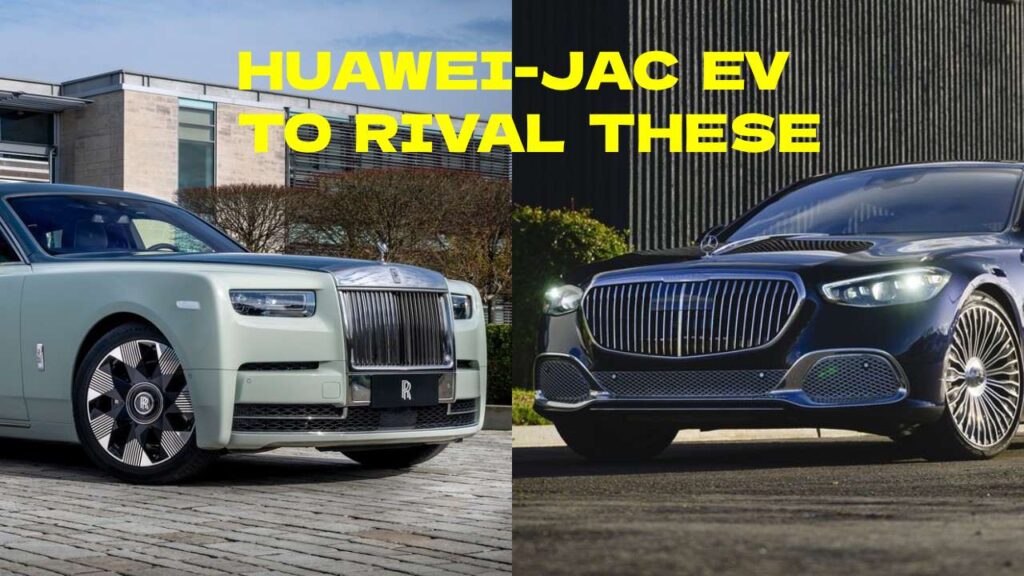
The consequence of this strategic partnership is slated to culminate in a luxury electric vehicle which is expected to go on sale in 2025. Chinese giants Huawei and JAC (Anhui Jianghuai Automobile Group) have announced a partnership to develop a luxury smart internet-connected electric vehicle which will allegedly surpass the iconic Mercedes Maybach and Rolls Royce Phantom in terms of comfort and luxury. That is what the Head of Huawei’s Smart Car Solutions, Yu Chengdong, said. To quote him, he said, “Yes, the name of Huawei-JAC has not been decided yet. This may be a million-level car, very high-end. Our benchmark far exceeds the level of Maybach and Rolls-Royce Phantom. It is more luxurious, higher-end, and more comfortable than them.” Note that this is Huawei’s fourth venture with a Chinese automaker. You might also like: US Tells China Not To Flood Its Auto Market Huawei & JAC To Create Better EV Than Maybach & Rolls Royce Phantom This opulent luxury car will sell for an astronomical price tag of ¥1 million (approx. $140,000 at current exchange rates). Considering the fact that China makes some of the most affordable EVs, it certainly excites me to witness what it will offer at this asking price. I guess a rival of the legendary Maybach, BMW and Rolls Royce is pretty much warranted. This joint venture, which doesn’t have an official name yet, will be an ultra-premium brand. Other prominent brands which Huawei has created with Chinese auto giants include – high-end Stelato (Huawei-BAIC), mid-range Luxeed (Huawei-Chery) and SUV-oriented AITO (Huawei-Seres). The Huawei-JAC will be positioned above all these. It will, in fact, be the “fourth realm” of the HIMA project. The aim is to disrupt the ultra-premium EV market and take the fight to the legacy luxury carmakers. As a part of this JV, the mega-opulent electric sedan is expected to debut in the fourth quarter of 2024. It will lock horns with the likes of the BMW i7 and Mercedes-Benz EQS. Those are some pretty accomplished rivals. But the synergies between Huawei’s prowess in digital communications technology and JAC’s automotive experience is what this partnership will be leveraging to create a unique luxury brand. You might also like: Young Americans Open To Chinese EVs Despite 100% Tariffs – Study Learn Electric Cars Says It fascinates me to know just how rapidly the Chinese EV market is moving. Despite being the biggest auto market in the world, the growth is still strong. The collaboration between tech and automobile companies is something which was unthinkable just a few years ago. Today, we are witnessing more and more such partnerships and joint ventures as EVs are becoming, essentially, electronic devices. The batteries, electric motors, in-cabin electronics, and electrically-assisted operations demand extensive use of electronic components. Therefore, association with tech and communication giants makes a lot of sense. Even Yu Chengdong mentioned that the key areas about such cooperations are user experience, user satisfaction, product quality and customer service. That is the direction we are heading in.

2025 Rivian R1S Spotted Testing

Latest Spotting of 2025 Rivian R1S Reveals New Design Details

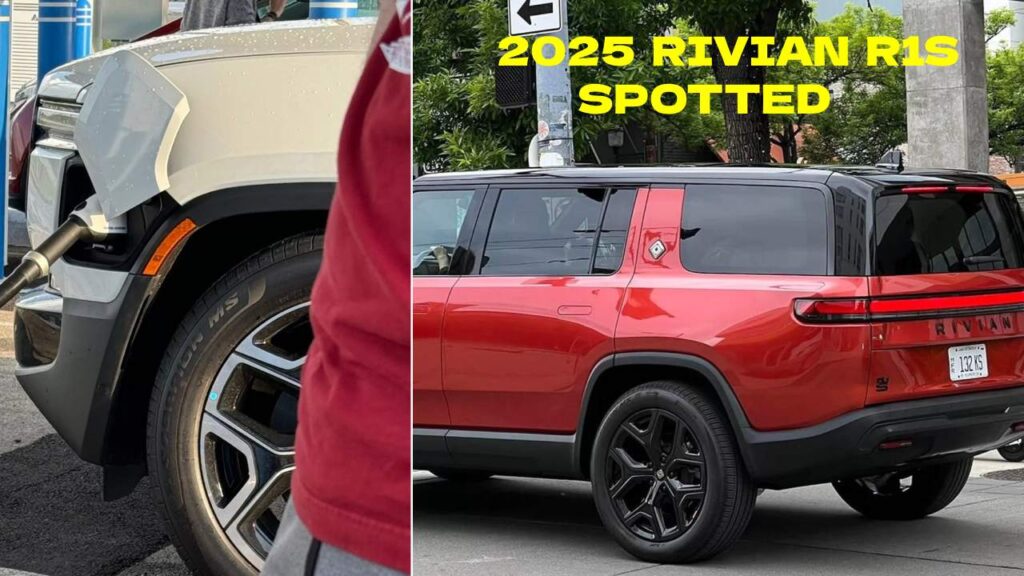
The 2025 R1 models will not just get aesthetic enhancements, but performance updates too. The 2025 Rivian R1S was caught testing recently which unveiled some design alterations and other details in comparison to the existing model. The American EV startup will refresh its electric SUV, R1S, just after two years of being in production. This implies that Rivian wants to keep its portfolio fresh amidst increasing competition and projected slowdown in EV sales. While we await official announcements, I suspect the launch might take place on June 27, which happens to be the Investor Day for Rivian. You might also like: Discounts On Rivian R1T And R1S – All You Want To Know Spy Shots Reveal Details of 2025 Rivian R1S The prototypes were seen performing test runs on streets without wearing any camouflage. As a result, we were able to discover a new set of LED headlamps. These will be slightly more sculpted and muscular in contrast to the current model lending it a modern appearance. Apart from that, the overall design silhouette will resemble the current model. Look closely and you will also spot the Black Package which incorporates dark elements on the bumpers, black wheels and de-chrome body. These spy images were uploaded to a Rivian Forums thread by a user named Peytonrg. He even mentions that, in addition to the aforementioned design updates, the 2025 Rivian R1S will even get silver wheel callipers. Another user claimed that he spotted the prototype a couple of days ago. He observed a new camera module for the mirrors, a “charger disconnect” button near the port, new alloy wheels and a slimmer lightbar. Therefore, I expect minor tweaks to design and functionality. The R1T pickup will also borrow most of these elements. You might also like: 4 Electric Pickup Trucks Driven Until They Died – Tesla, Ford, Rivian, Chevy Specs, New Battery and Heat Pump In addition to the exterior styling and some new features, the main talking point about the 2025 Rivian R1 models is the new battery and heat pump. The latter will be standard across the range. The battery will be a 92.5 kWh LFP unit instead of 105.9 kWh. This also results in a reduction of weight by 150 lbs (70 kg). LFP batteries will have a long-range, low cost and less use of rare earth minerals. There will be the option of choosing between either 20-inch or 22-inch alloy wheels. Finally, the AC compressor will be relocated to improve NVH (Noise, Vibrations, Harshness) levels. All this information surfaced courtesy of a leaked document a few days ago. Now the official EPA-estimated range figures will be available at a later stage. But the leaked documents mention a range of 380 miles (612 km) in the city and 322 miles (518 km) on the highway with 20-inch alloys. With the larger 22-inchers, however, this stat elevates to a rather enticing 405 miles (652 km) in the city and 340 miles (547 km) on the highway. Remember, Rivian EVs are now also eligible to use Tesla’s Supercharging network. It will continue to get the CCS port and the owners could access the Superchargers via an NACS adapter. You might also like: Rivian R3 Reminds Us Of Hyundai Ioniq 5, R2 Also Spotted Testing Learn Electric Cars Says The 2025 Rivian R1S SUV and R1T pickup truck are turning out to be exciting prepositions for a whole bunch of new potential EV buyers. They lock horns with the giants of the industry including the likes of the Tesla Cybetruck, Ford F-150 Lightning, GMC Hummer EV and Chevrolet Silverado EV. Hence, it makes sense for the American EV startup to keep its product range fresh. Also, the next step is toward the lower end of the market with products like the R3 and R2 in the pipeline. That will be the mass market strategy.

Entry-Level Affordable VW EV

VW Confirms An Affordable €20,000 Entry-Level EV For 2027

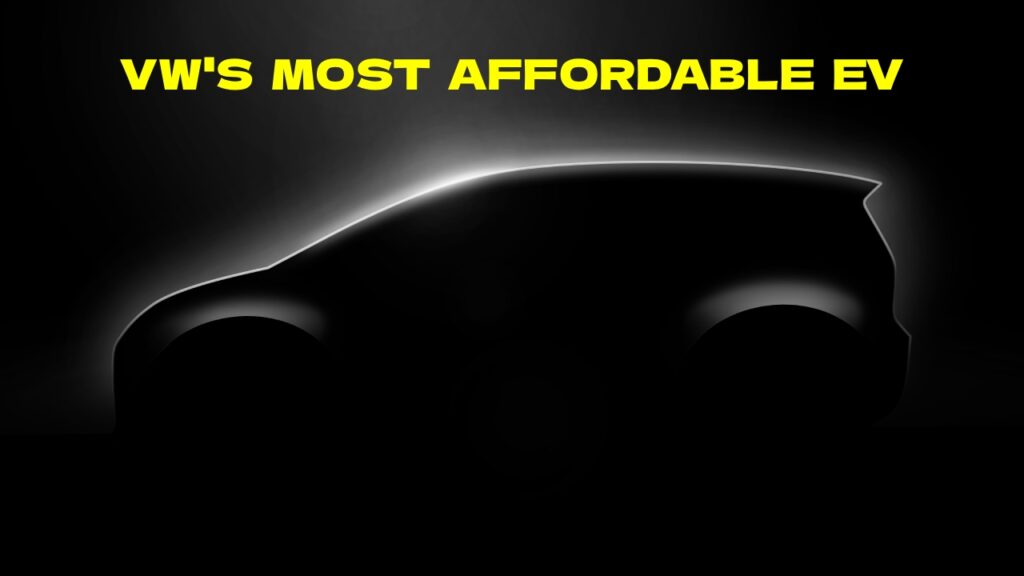
Volkswagen Group has been contemplating a €20,000 EV for quite some time now. VW has finally announced that its affordable €20,000 ($21,680 as per current exchange rates) entry-level EV will debut in 2027. The Wolfsburg-based auto giant has been working relentlessly on an inexpensive electric car to cater to the masses for a long time now. That is in line with its promise to create mobility for all in the upcoming electrified world. While not many details are available at the moment, we can assume the working title to be ID.1 for the moment. You might also like: VW CEO Says PHEVs Are Necessary Transitional Technology VW Announces Entry-Level EV For 2027 The official press release from Volkswagen Group mentions that in order to achieve the ambitious target of offering an EV for €20,000, a “high degree of localization” is needed. This model will initially be for the European market only. A key advantage of that is the reduction of long transport routes, which consequently minimizes CO2 pollution. Once the customers embrace it, we might witness it moving to other parts of the world. During this announcement, Volkswagen Group even released a teaser image of the silhouette of this entry-level EV. Albeit not much could be deduced from the image, it evidently bears a crossover body type. On top of that, one could even recognize the tall-boy stance with a short wheelbase. The wheel arches are quite well-pronounced. The rear section showcases a roof-mounted spoiler. The ID.2 SUV (slated to debut in 2026) inspiration is vivid. Management Comments On this momentous occasion, Oliver Blume, CEO Volkswagen Group said, “Generations of people associate the strong brands of the Volkswagen Group with their first car – and with affordable mobility. As a group with strong brands, we continue to assume this social responsibility to this day. That’s why I’m very pleased that we’re launching a future-oriented project. It’s about entry-level electric mobility from Europe for Europe. In doing so, we combine a clear commitment to Europe as an industrial location, a European industrial policy and ultimately act in the interests of European customers.” The CEO of the Volkswagen brand and head of the Brand Group Core, Thomas Schäfer remarked, “The future is electric. In order for electromobility to become widespread, attractive vehicles are needed, especially in the entry-level segment. Our brand promise is: electromobility for all. This promise is now being fulfilled in the Brand Group Core. Despite the attractive price, our vehicles will set standards in the entry-level segment in terms of technology, design, quality, and customer experience. This task has become more demanding due to rising energy, material, and raw material costs. One thing is clear: electromobility from Europe for Europe can only succeed with political support and competitive framework conditions.” You might also like: Hyundai Ioniq 7 Electric SUV Spied Testing Ahead of June 27 Debut Learn Electric Cars Says Affordable electric cars are what all major carmakers are heading toward. Due to the exorbitant prices of EV batteries in the last few years, it was almost impossible to offer a comparable vehicle at a price point in the vicinity of the ICE car. But with time, the battery costs have come down. The other enormous issue preventing mass adoption is range anxiety due to the lack of charging infrastructure. That is also being addressed by various governments around the world. Finally, the initial wave seemed to have plateaued, at least in the big markets like the U.S., China and the EU. Going forward, only low-cost EVs will be able to spur demand and generate traction and sales. Hence, most legacy carmakers are aiming for that enticing under-$25,000 price point. Once that becomes widespread and charging infrastructure catches up, we are bound to have more EVs on the roads.

Toyota Joins Hand With Idemitsu To Develop Solid State Batteries

Top 5 Carmakers Working On Solid-State Batteries For EVs – Toyota To BYD

There are some established, as well as new auto companies, that are focusing their resources on developing solid-state batteries. I have compiled a list of the top 5 most prominent auto giants/conglomerates that are developing solid-state batteries for their EVs. Many car manufacturers have either set up connections with other conglomerates or battery companies or are developing new tech in-house. The route toward the future of electric mobility seems to go through solid-state battery technology. While there are dozens of new tech in the works in many parts of the world, solid-state batteries seem to be emerging as the most feasible and widely acceptable solution, at least in the immediate future. You might also like: CATL Unveils World’s First LFP Battery With a 1,000-km Range Top 5 Companies Developing Solid-State Batteries For EVs Toyota It is a well-known fact in the automobile industry that Toyota is the least bullish on complete electrification among all legacy carmakers in the world. Interestingly, it was among the first vehicle manufacturers to adopt a hybrid powertrain over 2 decades ago. It still believes in the power of hybrid cars, as well as hydrogen. Hence, it is not working aggressively toward stuffing its portfolios with pure EVs. But that is not to say that it has no plans of ever going in full throttle on EVs. It is developing a solid-state battery and has even released a timeline of when it plans to come out with it. It has joined hands with the petroleum giant, Idemitsu Kosan. The two players are set to unveil their first solid-state battery by 2026-27. The final aim is to create a battery with a 1,200 km (746 mi.) range. Nissan Next up, we have yet another Japanese auto giant on this list. Nissan has been investing heavily in its All-Solid-State Battery (ASSB) technology. The unique aspect about Nissan’s solid-state batteries is its approach to eliminate the need for cooling. While the existing EV batteries rely on air or liquid cooling methods, Nissan believes that solid-state cells can withstand higher temperatures without compromising safety or performance. It will collaborate with NASA and UC San Diego, incorporating AI techniques to address issues like lithium dendrite growth, ensuring the safety and durability of the solid-state cells. You might also like: StoreDot and Polestar Achieve 10-Minute Charging w/ Si-Dominant Cells Stellantis Now I understand that Nissan is also a part of Stellantis, but I am considering it separately since the conglomerate had announced a crucial partnership by investing in Factorial Energy which is headquartered in the U.S. in 2022. At the time, Stellantis CEO Carlos Tavares said, “Stellantis is full-speed ahead on its electrification transformation with 33 electrified models available right now, and eight battery electric vehicles coming in the next 18 months.” Factorial Energy CEO Siyu Huang commented, “We continue to move aggressively towards our goal of delivering automotive-scale, solid-state battery technology to our customers.” Last month, Factorial signed an MoU with LG Chem for the development of solid-state battery technology. BYD and Nio with CATL It is nigh impossible to talk EVs without mentioning Chinese carmakers. We know that the Chinese automobile market drives the trajectory of the overall global auto industry. This is particularly true with electric cars. BYD is among the biggest EV makers on the planet. In fact, in the last quarter of last year, it even overtook Tesla as the highest-selling EV company on the planet. Nio is a Chinese luxury auto giant which offers incredibly tech-savvy vehicles to rival the premium carmakers from the West. Both these Chinese giants are working in tandem with CATL, the world’s largest EV battery company, to develop futuristic batteries. In February this year, CATL, BYD, Nio, CALB and some others announced a consortium to build a supply chain for solid-state batteries for their EVs by 2030. SAIC Finally, we have the Chinese conglomerate, SAIC, completing this list of top companies developing solid-state batteries for their EVs. It is one of China’s four largest carmakers. It owns SAIC Maxum, SAIC Volkswagen, MG, Baojun and Wuling. SAIC will introduce its first EV with a semi-solid-state battery, the IM L7, in October this year. The mass production of solid-state batteries for its EVs will commence from 2026 onwards. Interestingly, SAIC is not just working on solid-state batteries but on a full-stack technology solution for intelligent vehicles and a new platform with Audi for the Chinese market. Hence, it is one of those conglomerates which is quite close to introducing this tech to its upcoming mass-production electric cars. You might also like: Mazda and Panasonic To Work On Cylindrical Cells For EV Batteries Learn Electric Cars Says As things stand at the moment, I believe solid-state batteries are slated to play an imperative role in shaping the future of electric mobility across the globe. This seems to be the case despite new battery tech emerging almost every other week. With the sheer level of R&D and partial applications already, these batteries satisfy most needs of modern EVs. These include things like affordability, reliability, safety, range, weight and more. I shall keep covering further developments in this space as more information surfaces.