Learn Electric Cars

LEC Team

Upcoming Affordable Kia Electric EV2 and EV3

Upcoming Affordable Kia Electric EVs – EV2 and EV3

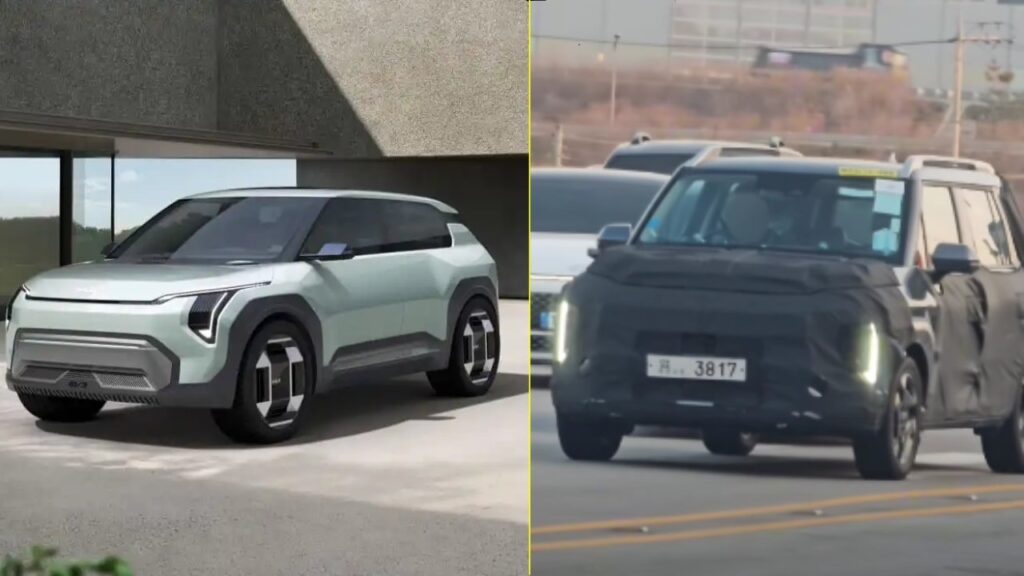
Kia targets launching 8 electric car models in the USA by 2029 including the likes of the EV2, EV3, EV4 and EV5. Kia is planning an onslaught of affordable electric cars with its upcoming models which include EV2 and EV3. In recent announcements and spy media, the EV2 has been spotted, while the EV3 also looks to go into production based on the concept version soon after. The future of electric mobility will rely heavily on the availability of affordable EVs. The Chinese car marques are already flooding the international markets with their inexpensive compact EVs. Even Ford has deployed its Skunkworks division to develop a range of cheap EVs from scratch. Since the Chinese carmakers don’t offer their models in the USA yet, thanks to exorbitant tariffs, legacy players like Kia can stretch their lead in this space with more mass-market electric cars. The EV2 and EV3 could be key products in that strategy. You might also like: Kia EV6 Facelift Spotted Testing – Everything We Know So Far Upcoming Affordable Kia EV2 and EV3 The Kia EV2 spy media stems from the 숏카 SHORTS CAR channel on YouTube. The visuals capture a heavily camouflaged, upright and compact vehicle plying on the road. One could deduce the sleek vertically-oriented LED DRLs, a boxy silhouette, prominent roof rails, stylish alloy wheels and an upright and tall-boy stance. Apart from that, the wheel arches are quite pronounced, lending it a rather muscular demeanour. Not many details are available about the specs or features. Nevertheless, if it were to launch in the USA, the prices could be in the vicinity of $20,000 – $25,000. In fact, the video mentions that the EV2 in its native market of South Korea could even start at $14,500 (20 million Won). On the other hand, the EV3 will be a compact electric crossover SUV. As a matter of fact, we might witness the EV3 in the flesh later this year (2024). In this case, we can infer a few aspects from the concept version. The front end will borrow aesthetic cues from the larger EV9 with a sleek LED DRL setup along with a slim LED headlamp cluster. The overall silhouette will bear SUV-ish traits with most design elements inspired by the EV9. In a detailed interview with the Automotive News, Kia America COO Steve Center said, “We’re ahead of most, and we’re trying to rush out ahead because our technology will be more evolved. You can’t just jump in and catch up. You have to have your own R&D, your own secret sauce.” This is a clear indication that the Korean auto giant will launch an affordable EV onslaught. You might also like: Kia EV8 Could Replace The Iconic Stinger In Electric Avatar Learn Electric Cars Says The entire automobile industry is evidently worried about the inexpensive Chinese EVs flooding the international markets in the immediate future. Sure, the demand for electric cars in top economies like the USA and China seems to have slowed down a little in comparison to the forecasts. Nevertheless, we have to remember that a whole lot of developing regions are still at a nascent stage when it comes to EV adoption. Markets like Thailand, Singapore, India, Brazil, the Middle East, and countries in Europe and South East Asia are yet to experience the EV explosion. The legacy carmakers have a presence in all these nations. Hence, everyone wants to get in the game of mass volume, low-cost EVs. That is where the future growth is set to derive from. Car marques like Kia and Hyundai have positioned themselves perfectly to cater to these regions with their mass EVs. With electric car models like the Ioniq 5, Ioniq 6, EV6 and EV9, Hyundai and Kia have already established themselves as pioneers in this space across the globe. They want to maintain their lead and expand their footprint before other auto giants catch up. Essentially, they are leveraging their first mover’s advantage to set up global dominance before the Chinese car companies do so.
Nio ET7 Semi Solid State Battery Range

Nio ET7 Achieves 665 Miles w/ Semi-Solid State Battery In Real World

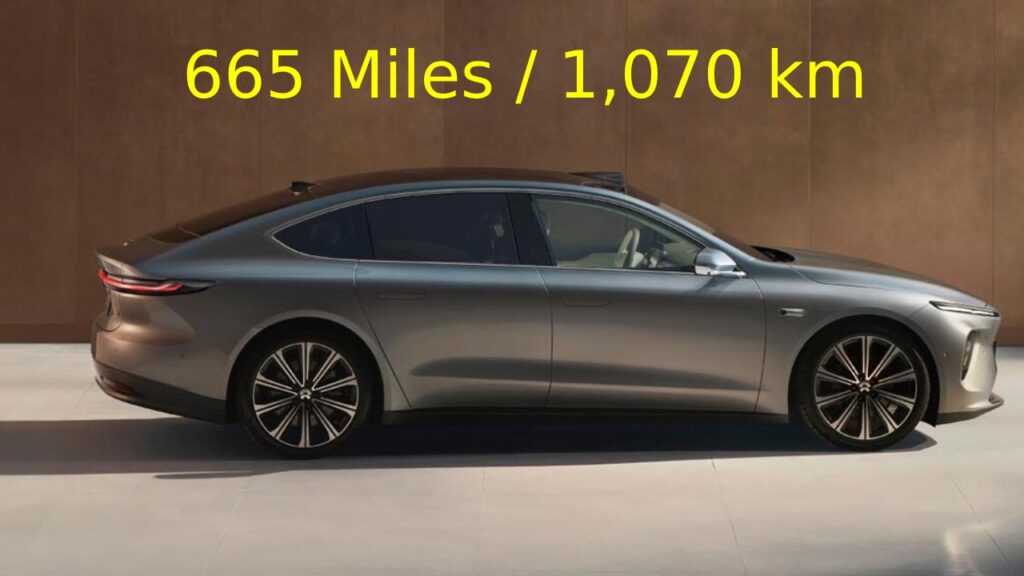
The Chinese automotive company has just rolled off its 150 kWh solid-state battery off the assembly line a few days ago. Nio ET7 has bagged a rather impressive milestone of completing 665 miles (1,070 km) on a single charge using the semi-solid state battery. This latest battery from Nio has a capacity of a substantial 150 kWh. This marked the first test of the ultra-long-range battery pack since its mass production. In December 2023, Nio Founder, Chairman and CEO, William Li drove the 2023 ET7 with a 150 kWh semi-solid state battery in a challenge where he drove for 1,044 km with 36 km of remaining CLTC range. You might also like: 5 New EV Battery Technologies – Aluminium-ion to Niobium Nio ET7 With Semi-Solid State Battery As per the official press release from the Chinese auto giant, the Nio ET7 with this new battery was tested on three different routes – from Kunming, Yunnan to Zhanjiang, Guangdong; from Beijing to Hefei, Anhui; and from Shanghai to Xiamen, Fujian. For these three routes, the electric car was able to drive for 1,070 km (665 mi.), 1,062 km (660 mi.) and 1,046 km (650 mi.), respectively. In the longest trip, the energy consumption was 12.7 kWh per 100 km and the driving time was 12.8 hours. The average speed was 83.7 km/h (52 mph) and the top speed was 118 km/h (73 mph). Also, the vehicle load was about 200 kg (441 lbs) and the altitude change was 1,875 m. Parameter Value Battery 150 kWh Semi-Solid State Range (max) 1,070 km (665 mi.) Energy Consumption 12.7 kWh per 100 km Average Speed 83.7 km/h (52 mph) Top Speed 118 km/h (73 mph) Altitude Change 1,875 m Driving Time 12.8 hours Details of the Trip Launch Details Nio opened pre-orders for the 2024 Nio ET7 on April 16 and the deliveries are set to commence on April 30. The official launch is slated for April 25. The pricing and specifications will be announced on that very day. You might also like: 91.5% of All Cars Sold in Norway in March 2024 Were Electric Semi-Solid State Battery One of the most intriguing aspects of this 150 kWh semi-solid state battery is that it is the same size as the 100 kWh unit. Moreover, it only weighs 20 kg (44 lbs) more even though it holds 50% more capacity. That makes it extremely efficient and highlights the advantages of semi-solid state batteries. In its construction, it differs from the regular Lithium-ion battery in that it has a solid conductive material suspended in a liquid electrolyte. On the other hand, Li-ion batteries have a liquid or gel-like electrolyte which enables the movements of Lithium ions between the cathode and anode. Hence, these are more prone to leakages and thermal runaways. Since, it is not so in semi-solid state batteries, they are safer. Also, they have higher energy density in the same volume which makes them perfect for applications in confined spaces. They are also better for the environment since they can be made using non-toxic materials. They are lighter than the regular Li-ion batteries which relates to the earlier point about their higher energy density. The solid material used in electrodes forms a porous layer which is able to absorb more active material resulting in higher energy density and improved performance. It allows more efficient ion transportation between the electrodes. All these factors combine to make the semi-solid state batteries lightweight, more efficient and more energy dense. You might also like: Hyundai Ioniq 6 N To Be A Meaner Avatar Of The Ioniq 5 N Learn Electric Cars Says Extensive work is happening in the field of EV battery technology at the moment. New players, as well as the existing firms, are deploying time, energy and resources to improve the existing tech. In essence, the aim is to reduce the battery size and weight and make them more energy-dense and efficient. All these factors will contribute toward creating EVs that can run for long ranges. The battery in the 2024 Nio ET7 is a prime example of how we can stretch the potential of an EV battery. Let us keep an eye out for more details in this space.

Hyundai Ioniq 6 N Spy

Hyundai Ioniq 6 N To Be A Meaner Avatar Of The Ioniq 5 N

The Korean auto giant is reportedly working on the fire-breathing iteration of the low-slung electric sedan. After gathering positive reviews from industry experts for the Ioniq 5 N, Hyundai is gearing up to launch the Ioniq 6 N. The Korean car marque is evidently excited about the performance versions of its Ioniq electric vehicle range. Having gained massive prominence, the Ioniq 5 is already available with the N badge, the first EV to wear it, while the Ioniq 6 could follow by 2025. Hyundai wants to ensure that performance enthusiasts don’t miss out on the fun as the industry transitions from coal-burning IC engines to electric cars. You might also like: Hyundai IONIQ 5 N Starts At $66,100 – How Does It Compare To The Rivals? Hyundai Ioniq 6 N The test mule has been spotted by hawk-eyed automobile aficionados multiple times now. The latest case comes from somewhere in Germany. It makes sense to test in Deutschland at the iconic Nürburgring track. By the looks of things, the electric monster will borrow most elements from the regular Ioniq 6. However, there will be a few aspects to enhance the performance. This ranges from aesthetic and aerodynamic components to mechanical modifications. Some of the most visual alterations include the likes of wider tracks, fender extensions, red brake callipers, an upgraded braking system, an extension of the rear spoiler and more. Furthermore, there will be an aggressive body kit in the production model. Still, these spy images give us a clear clue as to what the final product will look like. Notably, Hyundai could also deploy its Active Skirts technology to enhance aerodynamics even more. Hyundai Ioniq 6 N – Specs Albeit there are no official announcements from the Korean carmaker, it should be safe to assume that the Ioniq 6 N will borrow the powertrain from the Ioniq 5 N. Hence, we could see the dual-motor AWD version which could produce 641 hp of peak power for 10 seconds using the N Grin Boost function, just like the Ioniq 5 N. In regular settings, this mill will churn out a still impressive 601 hp and 770 Nm of peak power and torque. Powering the electric performance sedan will be an 84 kWh battery. To take things to a whole new level in terms of driving engagement, the Ioniq 6 N could take advantage of the N e-shift function which mimics an 8-speed automatic transmission to give the jolts experienced during actual gear shifts in IC cars by regulating motor torque. On top of that, it will also get the N Active Sound+ mode which imitates the sound of Hyundai’s 2.0-litre turbocharged engine. The overall aim is to bring the driving engagement and feel as close to orthodox performance vehicles as possible. You might also like: Hyundai Plans To Launch A Mini Electric SUV And Electric Van Learn Electric Cars Says It is clear that Hyundai is leaving no stone unturned when it comes to developing electric cars, hybrid cars, hydrogen cars as well as ICE cars. Since the exact path to the future of mobility is not certain just yet, Hyundai is active in all major categories. When the time comes, they can pivot and concentrate on any single route. It is quite commendable how Hyundai is able to juggle all these alternatives to ensure that it caters to all sorts of potential customers. For now, let us see how soon we get to experience the Ioniq 6 N in the flesh. Source

Tesla Autopilot Death Lawsuit Settled Before Trial Started

Tesla Settles Autopilot Death Lawsuit Hours Before Trial Started

The case about the death of a 38-year-old former Apple employee back in 2018 due to Tesla’s Autopilot was about to go before the jury for hearing. In a rather shocking turn of events, Tesla settles the notorious lawsuit over the death of a former Apple engineer, Walter Huang, while using Autopilot. This took place in 2018 on a San Francisco Bay Area highway. He was travelling in his Tesla Model X with Autopilot ON. The details of the settlement are still under secrecy. Tesla said that it agreed to settle this case to end years of litigation. Note that Huang’s family had filed the lawsuit in 2019. You might also like: Tesla Eyeing Indian Factory With Capacity Of 500,000 EVs Tesla Settles Autopilot Death Lawsuit The aim of this lawsuit was to hold Tesla responsible for exaggerating the capabilities of Tesla’s self-driving technology. Many cases against Tesla Autopilot have been filed, highlighting the ambiguity in the way Tesla promotes and advertises its semi-autonomous driving capabilities. Note that Walter Huang was allegedly playing a game on his iPhone during the crash. However, the Autopilot had been working for 18 minutes prior to the accident. This was revealed by the investigation conducted by the National Transportation Safety Board (NTSB). During the time of the unfortunate event, the vehicle was at a speed of 71 mph (114 km/h). The report also mentions that just 7 seconds before the crash, the Autopilot “began a left steering movement” and sped up. That is what ultimately caused the vehicle to hit the concrete barrier on the side of the highway. Walter succumbed to his injuries on the spot. We must also mention here that the NTSB report, after collecting the telemetry data from Apple, suggested that there was “possible user interaction”. Still, Huang’s family fought this finding because the report also cited “limitations” in Tesla’s Autopilot software which potentially contributed to the crash. Remember, the National Highway Traffic Safety Administration (NHTSA) has launched investigations into more than 950 crashes involving Tesla cars where Autopilot was claimed to be used. There are more than 3 dozen probes into crashes which resulted in 23 fatalities so far. Finally, Tesla decided to settle, at least, this case before it ever made it to the jury room. You might also like: Tesla Clocks 6 Million Lifetime Sales, 1 Million In Last 6 Months Learn Electric Cars Says Autonomous driving technology is constantly in the news for various reasons. While we understand the need and appeal, the implementation will be much harder than one would expect. We have to take into consideration the potential issues with not just the technology itself, but with the mentality of how people perceive, and ultimately use it. That is something no one can predict. Hence, even if we reach a point where the technology reaches its zenith and behaves perfectly (aka Level 5 Autonomous Driving Technology), we can never be sure about how car owners abuse it. That is something that policymakers, as well as car companies, will need to think about prior to declaring any car capable of autonomous driving without human intervention. We shall be watchful of how things pan out in this regard in times to come. Image Source

US Treasury Secretary Janet Yellen in China

US Tells China Not To Flood Its Auto Market

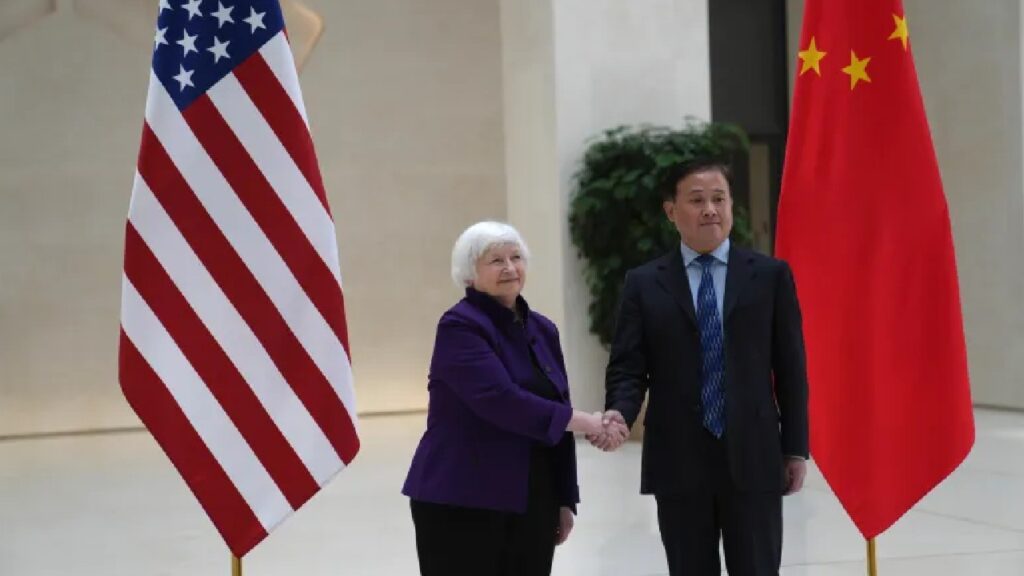
US Treasury Secretary Janet Yellen was on a 4-day trip to China’s southern city of Guangzhou and capital Beijing. In the recent trip of US Treasury Secretary Janet Yellen to China, the US was concerned about China about to flood the market. China, as we all know, is the manufacturing capital of the world. Its over-production capabilities have resulted in flooding the international markets. Fearing the dominance of EVs, the US is staying vigilant to not let Chinese carmakers into its territory. The EV war between America’s Tesla and China’s BYD has been going on for quite some time now. In the last quarter of last year, BYD overtook Tesla for the highest EV sales worldwide between the September to December period. That was the first time Tesla lost its top spot. However, in Q1 of 2024, Tesla regained the pole position. Still, the concerns regarding Chinese EVs flooding international markets, including the USA, at cost-effective prices are a threat to many countries. You might also like: Tesla Eyeing Indian Factory With Capacity Of 500,000 EVs US Tells China Not To Flood Its Auto Market Yellen mentioned that the massive Chinese government support more than a decade ago had led to below-cost steel flooding the global market, which “decimated industries across the world and in the United States”. She told a news conference at the US ambassador’s residence that, “I’ve made clear that President Biden and I will not accept that reality again.” She held the meeting with her Chinese counterparts Vice Premier He Lifeng and Premier Li Qian for a total of 11 hours. Yellen said she was especially worried about China’s weak household consumption and business overinvestment, “imbalances” she said were “aggravated by large-scale government support in specific industrial sectors.” Needless to say, the Chinese officials countered this allegation. China’s Commerce Minister Wang Wentao called the fears of overcapacity “groundless”. Premier Li told Yellen earlier that Washington should view the matter of production capacity “objectively” and from a “market-oriented” perspective. Beijing had expressed its “serious concerns” to Yellen about the US sanctions, tariffs and restrictions. The two countries have also agreed to open channels for further talks on excess capacity. You might also like: Toyota Hilux Electric Pickup To Enter Into Production By 2025 Learn Electric Cars Says This is a geopolitical situation where the overproduced and underpriced Chinese EVs and other products are threatening to take over various international markets. We have seen how Chinese electric cars are slowly expanding their global footprint. Moreover, they are offering great products with the latest technology, cheaper batteries, and exhilarating performance at incredibly attractive prices. That has been China’s approach since the inception of its globalization. The USA’s concerns are understandable since there would be too much dependency on one country. That has, unfortunately, been the case for the longest time. For instance, the EV battery raw materials and manufacturing largely take place in China. This is similar to the world’s most semiconductor chips being produced in Taiwan. During lockdown, the entire world reeled under the effect of this. Hence, too much dependence on one country for anything is not ideal in today’s world. Every major country is, therefore, focusing on local manufacturing. Utilizing its own resources, technology and labour is the best way to approach the future to become self-reliable. But then again, we live in a world of global connectivity, both physically and digitally. Hence, isolating a single nation won’t be easy. In any case, let us keep an eye out for further developments in this case.

Electric Car Sales in Norway

91.5% of All Cars Sold in Norway in March 2024 Were Electric

Norway is well on its way to banning the sales of petrol cars by as early as next year! Norway has displayed exemplary practices in embracing electric cars, boosting sales and banning petrol and diesel cars in the next few years. We know that Norway has been ahead of the entire world in terms of EV adoption for a long time now. You would be surprised to know that in March 2024, the BEVs sold in Norway comprise of 91.5% of all new car sales in the country. Out of these, 89.3% were BEVs, 5.7% were hybrids (HEV), and 2.2% were plug-in hybrids (PHEV). Shockingly, there were only 2% cars which had a diesel engine. Intriguingly, the sales of petrol cars were almost negligible. That has to be one of the most unique sales distribution charts you’ll see in this modern world. You might also like: Ford Hits Pause On Electric Pickup Plans, To Focus On Hybrids Instead Norway Electric Cars Sales Norway is one of those nations, where EVs from the USA and China sell together. The Chinese carmakers include the likes of BYD and Xpeng. Apart from that, there are other major car marques including Tesla, Toyota, VW, Hyundai, Nissan, Honda and more. Hence, there are tons of options for the buyers to choose from. This has led to a situation where the country has 700,358 BEVs on the road and 776,003 petrol cars. By the end of this year, it is possible that the total BEVs will outnumber the petrol cars. Additionally, there are a total of 339,724 hybrid cars on Norwegian roads. However, there is still some time for BEVs to overtake diesel cars – 1,068,929. But it is clear that the sales of petrol cars are negligible and are unlikely to grow going foward. Hence, BEVs can overtake petrol car sales by the end of 2025. Let us also take a look at the top 10 BEVs sold in Norway in March 2024. Model Sales Tesla Model Y 1,987 Toyota bZ4 759 Hyundai Kona 257 VW ID.Buzz 244 Toyota Proace 234 MG 4 230 Tesla Model 3 220 Nissan Leaf 199 Hyundai IONIQ 5 190 Nissan Arya 161 Top 10 Highest-Selling EVs in Norway in March 2024 You might also like: Tesla Eyeing A $3 Billion Indian Factory With Capacity Of 500,000 EVs Learn Electric Cars Says Norway has set a classic example of how to embrace EVs fully. In all fairness, the government of Norway was extremely persuasive in convincing people to switch to electrified vehicles. That becomes clear from their enticing incentives for EVs. This includes free tolls, free parking, and tax exemptions for EVs while increasing the taxes on ICE cars. Apart from that, the small country has over 5,600 fast chargers throughout its area. Finally, the country produces over 90% of its electricity from hydroelectric power and almost all the rest comes from wind power. Hence, it is not just about EVs and EV infrastructure, but the country completely shifted to renewable sources of energy across the board. With such normalization of electric transportation and green energy generation, no wonder over 91% of all new car sales in the country come from electric powertrains. Image Source

Stellantis CEO About EV Battery Weight

Stellantis CEO Aims To Cut EV Battery Weight By Half

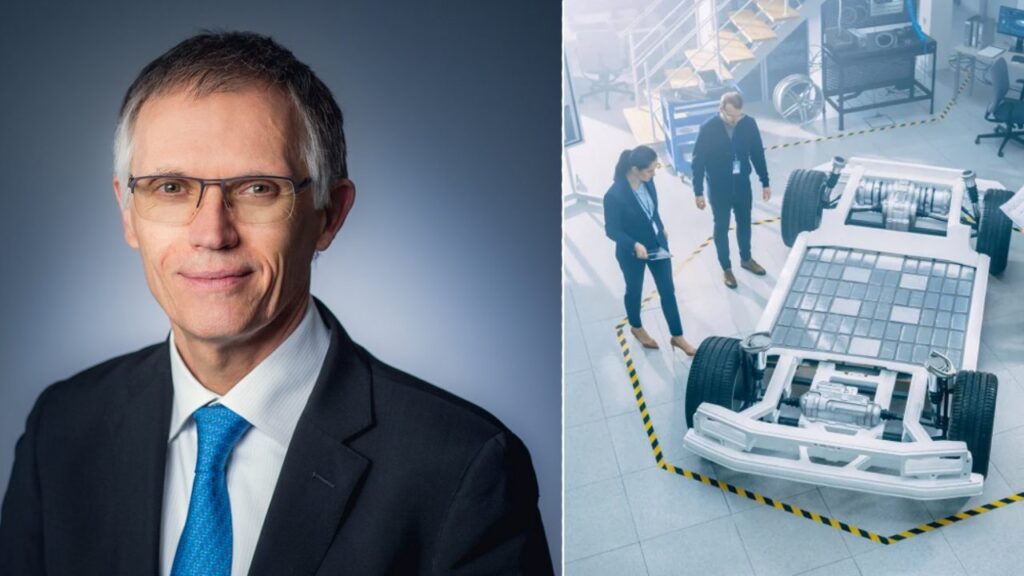
The size and weight of EV batteries have been a topic of debate and contention since the inception of electric cars. Stellantis CEO, Carlos Tavares, wishes to reduce the weight of the EV battery packs by half over the next decade. Now, we know that the EV battery constitutes a major chunk of the overall mass of a vehicle. In EVs, the entire bottom part of the car comprises of the battery. In fact, in some formations like cell-to-body, the top layer of the cell container forms the floor of the EV. The higher the number of cells in an EV battery, the higher its range. But so is the weight of the vehicle. You might also like: Top 3 Potential Alternatives To Lithium-Ion Batteries For EVs Stellantis CEO Aims To Cut EV Battery Weight At the recent Stellantis Freedom of Mobility Forum, Carlos Tavares expressed his concerns regarding the excessive weight of EV batteries. He said, “From an environmental standpoint … I don’t think it makes sense [to have such heavy battery packs]. I think over the next decade we’ll be able to reduce the battery pack weight by 50%, hence reducing by 50% the use of additional raw materials against a conventional vehicle.” This conversation was a part of his interview with Reuters. Furthermore, he added that the existing EV batteries with a range of around 250 miles (400 km) need approximately 500 kg (~1,100 lbs) of additional raw materials over conventional ICE cars. That is an alarming figure with regard to the environment. With the ongoing R&D in the EV battery technology, the batteries will become more efficient which will, in turn, reduce the weight to offer a similar range. Stellantis’ EV Plans Interestingly, the Stellantis CEO didn’t mention any specific way to reduce the weight of the battery by half. Still, it hopes that 100% of sales in Europe will be for all-electric vehicles by 2030. By this time, the conglomerate also estimates that 50% of its sales in the USA will be for BEVs. To put this into concrete numbers, Stellantis aims to sell 5 million BEVs annually by 2030. To achieve this ambitious target, it will have introduced more than 75 BEVs by 2030. These EVs will make use of 4 vehicle platforms under the SLTA architecture – Small, Medium, Large and Frame. The latter will be a body-on-frame platform for hardcore electric off-roading SUVs. Moreover, it will incorporate 3 drive modules, 2 battery cell chemistries, front-, rear-, and all-wheel drive configurations. Its electric cars will possess a range between 500 km and 800 km (300 miles to 500 miles). Hence, depending on the market and customer preferences, Stellantis will have all sorts of combinations to cater to the demands. You might also like: Mazda and Panasonic To Work On Cylindrical Cells For EV Batteries Learn Electric Cars Says We know that batteries form the most critical component of an EV. This is true for the contribution in the weight of an electric car, as well as the price. That is also the reason why most legacy carmakers and new startups are investing heavily in EV battery technology. In fact, we have reported so many innovative techniques to maximize range and improve the safety and durability of EV batteries without increasing the price too steeply. We are certain that in the coming years, the weight and prices of EV batteries will go down, while the range and efficiency will rise.

Next-Gen Ford Electric Pickup Truck Delayed

Ford Hits Pause On Electric Pickup Plans, To Focus On Hybrids Instead

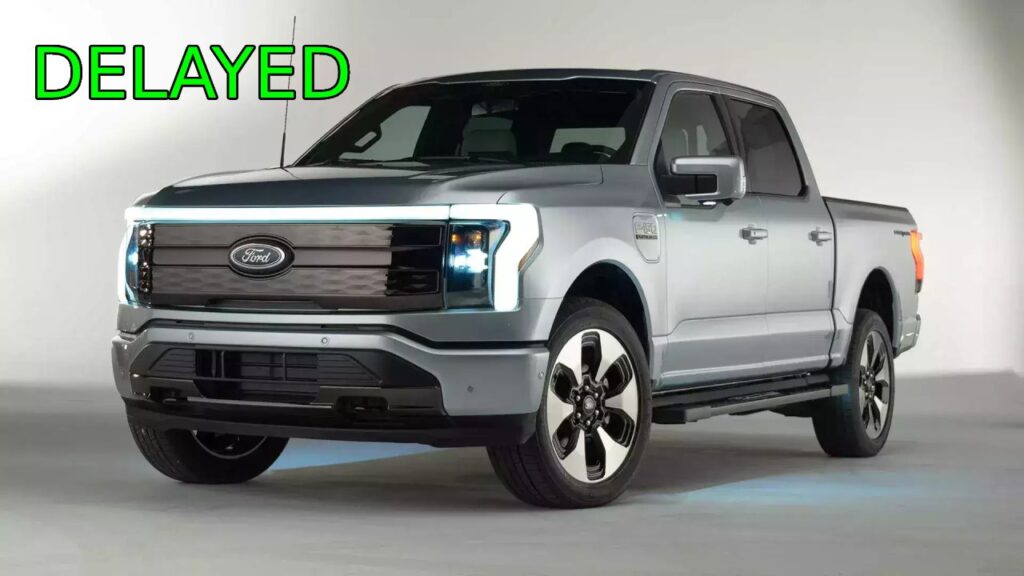
Ford becomes yet another legacy carmaker to reassess its ambitious EV plans and the decision to skip hybrids. The next-generation Ford electric pickup truck was slated for launch by next year (2025). However, with the current slowdown in the EV demand, the pickup truck will now arrive in 2026. That’s not all. Its three-row electric SUV has been delayed to come in 2027. It was originally supposed to arrive in 2025 too. This marks a vivid reconsideration of Ford’s original plans of skipping the hybrid cars. You might also like: 4 Electric Pickup Trucks Driven Until They Died – Tesla, Ford, Rivian, Chevy Ford Electric Pickup Delayed Ford CEO Jim Farley announced that the American giant will emphasize deploying capital wisely to plan the future. As a consequence, it has delayed the launches of the two all-electric vehicles. Instead, in fact, the American auto major will focus on hybridizing the existing internal combustion cars in its entire portfolio. He said, “As the No. 2 EV brand in the U.S. for the past two years, we are committed to scaling a profitable EV business, using capital wisely and bringing to market the right gas, hybrid and fully electric vehicles at the right time. Our breakthrough, next-generation EVs will be new from the ground up and fully software enabled, with ever-improving digital experiences and a multitude of potential services.” Even though the existing Ford F-150 Lightning is doing decently on the sales charts, Ford is not confident if the next-gen EVs will experience high demand as the entire EV industry braces for slow growth this year. We also know that Ford will drop the “Lightning” nomenclature for the next-gen electric pickup truck. As for the delays, Ford feels that this will provide the EV segment enough time to mature. Furthermore, it will lead to Ford being able to capitalize on emerging battery technology which will offer the consumers enhanced “durability and better value.” You might also like: Tesla Eyeing Indian Factory With Capacity Of 500,000 EVs Learn Electric Cars Says Prominent carmakers are resorting to re-think their strategy of going all-electric too soon. Many thought that when electrification is the end goal, why invest in a transitioning technology like hybrid cars? But slowly, they are realizing that the growth and demand for EVs might not be as exponential as the industry experts initially predicted. In such a scenario, hybrid cars could provide a perfect stepping stone to reach mass EV adoption in the coming years. Therefore, going hybrid makes a lot of sense. Let us see which other car marques adopt this route going forward.

Tesla Factory India

Tesla Eyeing Indian Factory With Capacity Of 500,000 EVs

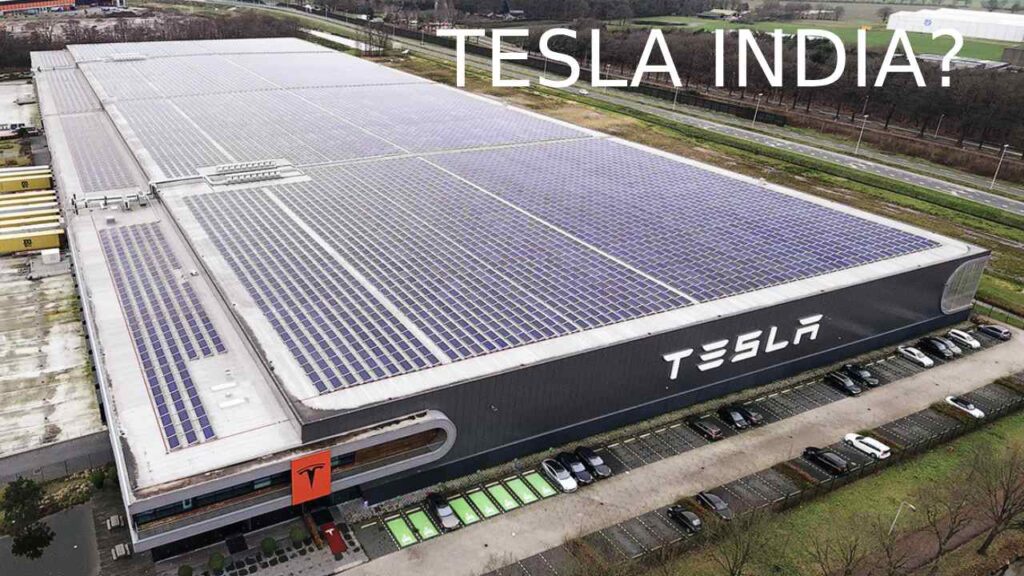
Elon Musk has been trying to enter the Indian market for a couple of years but the 100% import duty was a huge hurdle. The Indian factory of Tesla might soon become a reality which could have an annual capacity of 500,000 EVs. The recent EV policy of the government of India to reduce the import duties on premium cars from over 100% to 15% has created a buzz among interested parties. On top of this list was Elon Musk’s Tesla. It was in talks with the Indian government for the past couple of years, seeking a reduction in import tariffs. However, the Indian government had unequivocally clarified that it is willing to do so only if the foreign carmaker is prepared to set up local manufacturing with a minimum investment of $500 million. With the new EV policy, the import taxes are just 15%. Hence, Tesla is sending out officials to India to look for the ideal location to set up a factory which could incur a cost between $2 billion and $3 billion. You might also like: Tesla Reclaims Title Of World’s Largest EV Maker With Q1 Sales Tesla Plans Indian Factory With 500,000 Capacity This won’t be the first time Tesla will be sending out officials to India. There were many reports last year suggesting that the American EV maker was already scouting for Tesla headquarters in Bangalore, Karnataka. Apart from that, the officials were present to have dialogues behind closed doors with the Indian government officials to hurry with this EV policy. Now that it is finally here, it is Tesla’s turn to keep its end of the promise. The Indian automobile industry is the 4th largest in the world, behind only China, the USA and Japan. Hence, Tesla understands the importance of this burgeoning marketplace. This is especially crucial since the EV demand, in top developed countries like the USA and China, is dwindling. In fact, the industry is anticipating a slower growth this year. In such a scenario, expanding its footprint across diverse nations like India, the Middle East, South East Asia and parts of Europe seems logical. Tesla’s $25,000 EV A crucial part of Tesla’s future plans is the much-talked-about ~$25,000 EV. It is very much possible once manufacturing shifts to a country like India. In India, Tesla is closely evaluating regions like Gujarat, Maharashtra and Tamil Nadu to set up the production facility due to the already existing automobile infrastructure in these regions, the availability of OEM suppliers, and proximity to the ports in order to flood the neighbouring markets with Made-in-India EVs. Once Tesla commences its operations here, many auto ancillaries will also be attracted. This would increase the foreign investment in India significantly. In return, the government of India will extend enticing subsidies and incentives to Tesla to sell their vehicles in the country. In that way, the local economy will get a boost with this investment, and Tesla will be able to manufacture its EVs are affordable prices to compete with tons of newcomers in various new markets in this part of the world. Hence, it will be a win-win for both stakeholders. You might also like: Tesla Clocks 6 Million Lifetime Sales, 1 Million In Last 6 Months Learn Electric Cars Says Tesla, just like many other international companies with varied backgrounds, is ideally trying to shift operations from China to India. While that is a big deal, choosing India makes sense otherwise too. In order to expand its global footprint, having a base in one of the biggest automobile markets in the world is prudent. Even though the EV demand in China and the USA is slow, the Indian and its neighbouring markets are still at a nascent stage. There is a ginormous room for growth, at least for the next few years. Let us see how fast Tesla can capture the Indian market and commence production there.

Tesla Total Sales Q1 2024

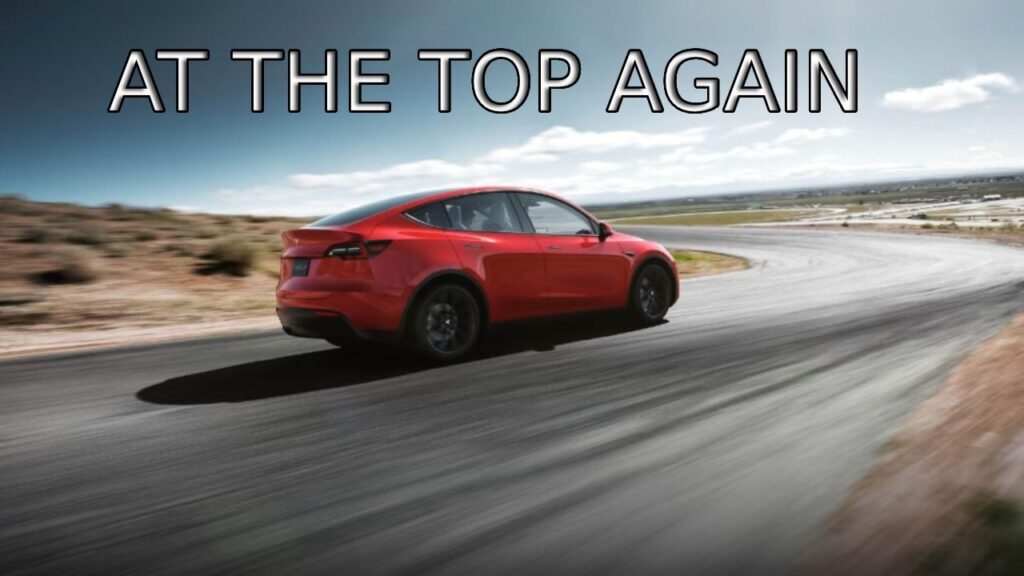
Tesla Reclaims Title Of World’s Largest EV Maker With Q1 Sales

The American EV giant sold 386,810 electric cars in Q1 of 2024 in comparison to BYD’s 300,114 units. As per the sales data for Q1 2024, Tesla has reclaimed its title of the biggest EV maker in the world. This news report becomes important because, in the last quarter of 2023, the Chinese auto giant BYD overtook Tesla in total EV sales. That was a huge deal where the American auto giant had lost the top spot in quarterly sales for the first time ever. Speculations were floating suggesting that the Chinese automakers might finally be about to take over. But the first quarter of 2024 indicates otherwise. You might also like: Tesla Clocks 6 Million Lifetime Sales, 1 Million In Last 6 Months Tesla Q1 2024 Sales The 386,810 units sold by Tesla in Q1 of 2024 might be the highest in the world, but this number is significantly lower than what it sold in the last quarter. How low? Well, 20.2% lower! Not only that, this Q1’s sales are also 8.5% lower than the Q1 of 2023 (same period from last year). That is an unequivocal indication of the overall industry slowdown. In fact, the global automobile industry is largely driven by the Chinese market. Hence, these numbers represent the slowing down of EV demand. BYD Q1 2024 Sales That also explains the huge decline in BYD’s EV sales of 300,114 units in this quarter in comparison to the last quarter (526,409). However, in BYD’s case, these sales numbers are a significant 13.4% higher than what it sold in Q1 of 2023 (same period from last year). These numbers highlight that this year is going to be a slow year in terms of sales and demand for EVs. You might also like: 1,300 hp BYD YANGWANG U9 Is Ready To Redefine Electric Supercar Segment Learn Electric Cars Says The overall EV industry is in a slowdown, at least in the biggest economies in the world including the USA and China. Hence, these dictate the overall market trends. Nevertheless, some developing countries are still new to this EV revolution and are, therefore, displaying extremely positive growth signs. Going forward, the EV industry could also benefit from these small nations as EV adoption becomes more widespread. In any case, we shall have to keep an eye out for how each quarter from here on pans out in terms of global sales.