Learn Electric Cars

LEC Team

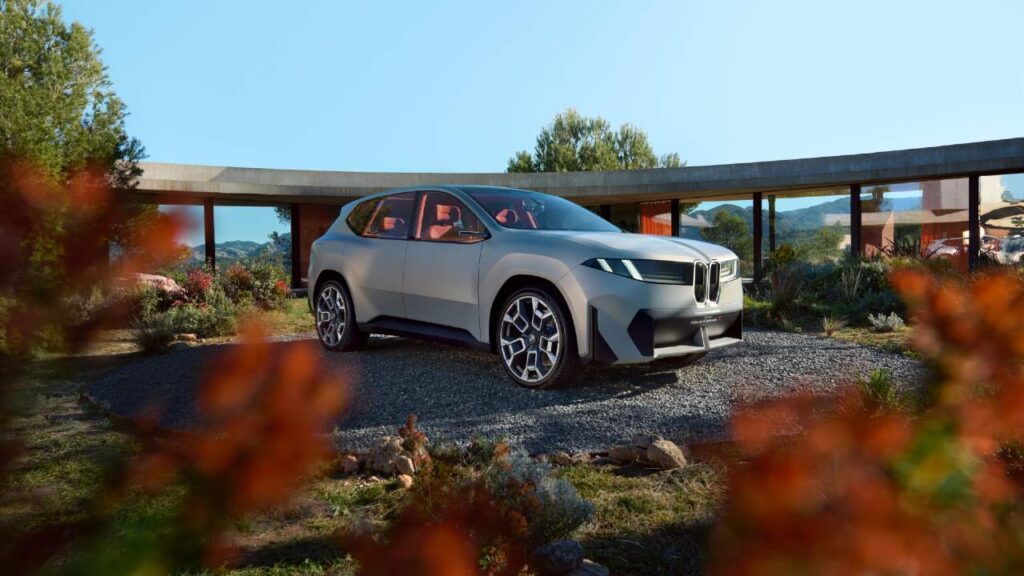
BMW Vision Neue Klasse X Front Three Quarters

Key Highlights Of The BMW Vision Neue Klasse X Revealed

BMW has showcased its Vision Neue Klasse X SAV (Sports Activity Vehicle) and the production will commence in 2025 in Debrecen, Hungary. The BMW Vision Neue Klasse X has been revealed with fascinating details. Note that the Neue Klasse X represents the future of electric SUVs from the German carmaker. On the other hand, the Vision Neue Klasse unveiled at the IAA 2023 was the concept sedan for future models. Essentially, the Neue Klasse X borrows the ‘X’ nomenclature from BMW’s regular lineup which represents SUVs or SAVs, as BMW likes to call them. The technological features on the new concept are revolutionary. You might also like: Mercedes VISION EQXX Drives 1,010 km On Single Charge, Still Has 309 km Range Left BMW Vision Neue Klasse X – Key Highlights Exterior Styling BMW has gone back to the 1960s to take inspiration from the first-ever Neue Klasse range of vehicles. Back then, it saved the company from disaster. It is calling back that name to mark yet another inflexion point in its current journey to enter the future. Nothing could remind us more of the 1960s than the iconic grille, or lack thereof, on the Vision Neue Klasse X. The typical ‘Kidney Grille’ is a 3D sculpture which is vertically aligned with backlit contours. When the driver approaches, the grille and headlamps create a unique lighting effect. At the rear, the Vision Neue Klasse X bears the familiar L-shaped LED taillamp pattern. On this occasion, it carries the 3D elements which are individually controlled for light intensity. The body color features a cool trick which can form a transparent or reflective surface, depending on the viewing angle. You might also like: All-New Audi Q6 e-tron Quattro Revealed With New Platform Interior and Technology The cabin is powered by incredible technology on the back of four totally new super brains: high-performance computers. The main attraction has to be the BMW Panoramic Vision which projects key information across the full width of the windscreen above the dashboard. Complimenting this is the BMW 3D Head-Up Display and BMW Intelligent Personal Assistant for better human-car interaction in comparison to Alexa Support. There is also a Central Display which the driver and passenger can access for all cabin controls and entertainment. You might also like: Taycan Turbo GT Becomes The Most Powerful Porsche Ever Specs Since this is not a production-spec model, the specific details about the powertrain are not available. Still, BMW informs us about the core of the electric SAV of the future. The latest iteration of BMW’s sixth-generation eDrive technology plays a pivotal role in achieving remarkable efficiency. Alongside enhanced e-drive units, it introduces newly designed round lithium-ion battery cells with a volumetric energy density exceeding that of previously utilized prismatic cells by over 20%. Coupled with the transition to an 800-volt system, this advancement enhances charging speed by up to 30%, enabling vehicles to achieve a 300-km range with just ten minutes of charging. Moreover, the sixth generation of BMW eDrive extends its range by up to 30%. In terms of aerodynamics, the BMW Vision Neue Klasse X showcases a significant improvement, with drag reduced by 20% compared to a comparable model in the current lineup. Further enhancements, including new tyre designs and a specialized brake system tailored for fully electric vehicles, contribute to an overall increase in vehicle efficiency by up to 25%. You might also like: Hyundai IONIQ 5 N Starts At $66,100 – How Does It Compare To The Rivals? Learn Electric Cars Says We know that this is not the production model. However, BMW claims that it is quite close to production. Hence, we could expect most elements to make it to the flesh. It would be fair to deduce that BMW is certainly transforming its entire design philosophy to meet the challenges of the future. Furthermore, it is backing it up with the latest technology. Most of it has been built in-house, which makes it reassuring for the users. Finally, the intelligent brains of the EV will ensure legendary performance, something BMWs are known for. Also, the cabin will be a place where the occupants will thoroughly feel pampered.
Alternatives to Lithium-Ion EV Batteries

Top 3 Potential Alternatives To Lithium-Ion Batteries For EVs

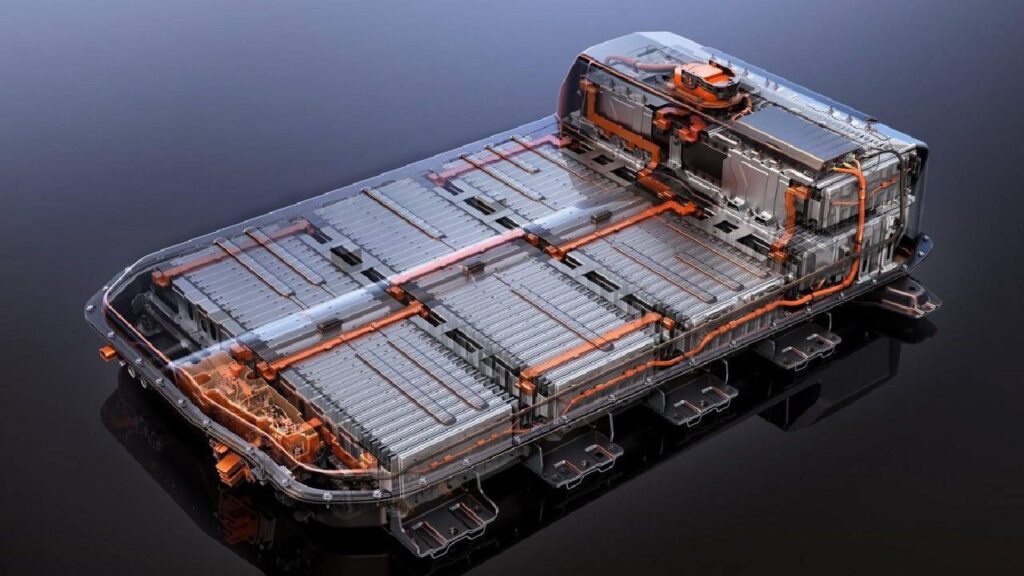
In a world where new EV battery tech is being developed almost every other day, it seems like Lithium-ion chemistry might not be the only way forward. As the R&D in EV battery technology progresses, we might soon get acquainted with the alternatives to Lithium-ion batteries for EVs. In fact, in small volumes, there are already some of these alternatives being used. However, to have either of these on a commercially large scale is still distant. In any case, this opens up new avenues to explore to tackle the shortcomings of Lithium-ion batteries. You might also like: New CATL Batteries To Retain 80% Capacity After 12 Years Alternatives To Lithium-Ion Batteries For EVs Carmakers have been using Lithium-ion batteries in EVs on a large scale for a good part of a decade now. Its advantages include high energy density, decent safety, great affordability, long battery lifespan, power, etc. In fact, a typical Li-ion battery has an energy density of 150-220 Wh/kg. But its cons will come to the surface in times to come. This includes dependence on rare earth minerals like Nickel, Manganese and Cobalt (NMC), water and resource-intensive mining processes and complexity during recycling. Hence, researchers are looking for alternatives. Among others, the most promising options are the following: Sodium-Ion Batteries One of the most promising types of chemistry which could replace Li-ion is Sodium-ion. There are specific reasons for this. In contrast to Lithium which only has limited reserves and the mining process is resource-intensive, Sodium is one of the most abundant elements in the earth’s crust. To put things into perspective, the Sodium-to-Lithium ratio in Earth’s crust is 23,600 parts per million (ppm) to 20 ppm. Even the cost of extraction is substantially lower. Manufacturing-wise, these batteries can be produced at the same facilities and production lines as the existing Li-ion batteries. Hence, the scalability can be rapid. Moreover, Sodium possesses the ability to be stored and transported at zero volts. This results in massive safety promises. It is also low flammable, further enhancing its safety aspects. One of the downsides, however, is the low energy density – 140-160 Wh/kg. This reduces the range of EVs, which is a big obstacle in its mass adoption. Secondly, a typical Li-ion battery has a lifespan of around 8,000-10,000 charging cycles. But Sodium-ion batteries are only able to achieve around 5,000. Nevertheless, research is going on to tackle these issues in various parts of the world. You might also like: Next-Gen EV Batteries From Korean Giants Unveiled At InterBattery 2024 Solid State Batteries Solid-state batteries offer several advantages over traditional batteries. By using solid electrolytes, they mitigate the risk of dendrite formation, enhancing battery longevity. Furthermore, their reduced flammability improves safety, while their higher energy density and faster charging cycles provide superior performance. However, challenges exist, including scalability issues compared to sodium batteries, which are lower in cost and easier to integrate into existing production infrastructure. Manufacturing costs for solid-state batteries are presently higher than lithium-ion batteries, hindering widespread adoption. To propel solid battery technology, durable solid-state electrolytes must be developed, although the ideal electrolyte remains elusive. Nonetheless, companies like Solid Power are making strides, boasting a sulfide electrolyte-based battery with significantly higher energy density than lithium-ion alternatives. Solid Power aims to power 800,000 electric vehicles annually by 2028 with its solid-state technology. While solid-state batteries are commercially available for small-scale applications like wearable electronics, IoT devices, and medical implants, they are not yet suitable for large-scale energy storage. Shirley Meng emphasizes the need for realism, asserting that while viable for IoT and wearables, solid-state batteries must scale to produce terawatt hours of energy to truly impact the energy transition. You might also like: Are EVs With 1000 km Range Still A Distant Reality? Lithium-Sulphur Batteries As the name suggests, these batteries still use some Lithium. But because Sulphur is used instead of NMC, it is more abundantly available in the earth’s core and is less resource-intensive to extract. Apart from that, Sulphur is also a by-product of natural gas processing and oil refining. Till the time this process continues, there won’t be any shortage of Sulphur. The resemblance with Li-ion batteries ensures that their production is easy and scalable using the same manufacturing plants and processes. These are also considerably more energy-dense in comparison to regular Li-ion batteries. On the other end of the spectrum, there are some peculiar disadvantages which prevent commercialization at the moment. These include poor chargeability which leads to the formation of tree-like structures called dendrites. They can cause short circuits and battery failure. Also, the prototypes have just been able to work for 50 charge cycles, rendering them useless to power EVs. Interestingly, Lithium-Sulphur batteries already exist in the mass market in products like electronic gadgets and wearables. You might also like: Nyobolt Battery Can Charge Fully In Just 6 Minutes Learn Electric Cars Says The EV revolution has reached an intriguing point in its journey. In developed markets like the USA and China, the demand has slowed down. On the other hand, there are still some prominent markets where the transition is still at a much nascent stage but the demand and sales are exponential. These would be countries like India, Brazil, Thailand, Singapore, etc. In the meantime, there are new breakthroughs in EV battery technology on a daily basis. This constant development is not going to stop anytime soon. Therefore, at this point, we can infer that there will probably be no single silver bullet. Multiple batteries and technologies would co-exist depending on the use cases. That’s why it is prudent to learn about all the new EV battery types that have a shot of making it to the mass market as alternatives to Lithium-ion batteries for EVs.

Mercedes-Benz VISION EQXX Range

Mercedes VISION EQXX Drives 1,010 km On Single Charge, Still Has 309 km Range Left

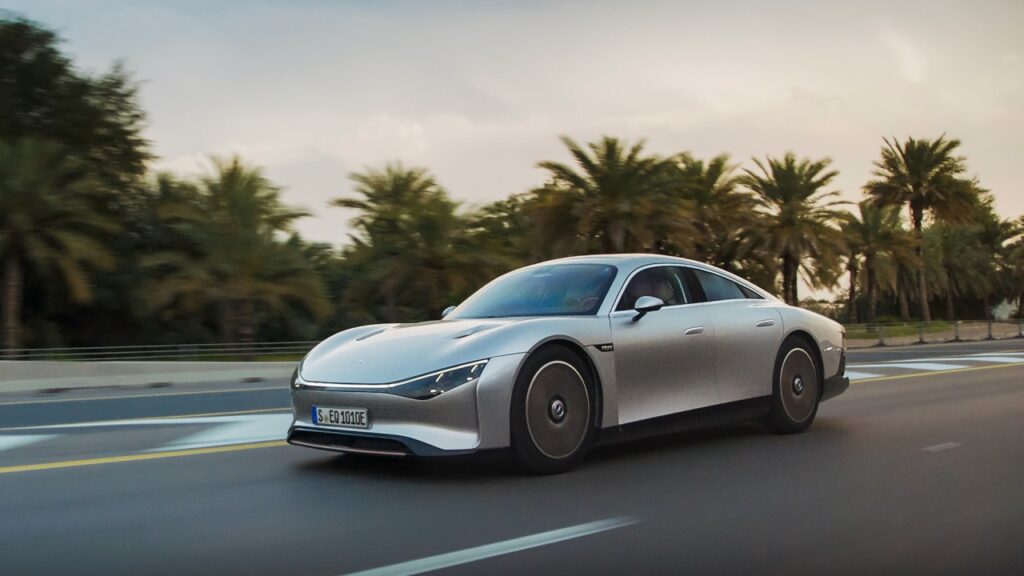
Mercedes-Benz is on an efficiency-demonstration spree with its VISION EQXX project achieving new records every day! The Mercedes VISION EQXX achieved a 1,010 km (627.6 mi.) range on a single charge and still had 309 km (192 mi.) of range in the tank. The German luxury carmaker is hyper-focused on achieving unprecedented levels of efficiency with its VISION EQXX concept. This is its third long (1,000 km+) and arduous journey across treacherous terrains to put the EV and its components through their paces. Prior to this, it had already successfully concluded a 1,000 km+ journey across Europe. This time around, the location – Arabian Peninsula, is a bit more extreme. This odyssey took place between Riyadh and Dubai in 14 hours and 42 minutes. The trip included urban and sub-urban sections with heavy traffic and lengthy highway sections across the open desert. You might also like: 2024 Mercedes EQS and EQE Get All-New Braking, More Range Mercedes VISION EQXX Achieves Incredible Range As per the official press release by Mercedes-Benz, the stunning test vehicle displayed an impressive power consumption of 7.4 kWh / 100 km (8.4 mi / kWh). This is an equivalent of approximately 0.9 l / 100 km or 282 MPGe for a gasoline vehicle. This test took place in an ambient temperature range of upto 34 degrees Celsius (93 degrees Fahrenheit). Note that the VISION EQXX boasts a drag coefficient of 0.17. On this momentous occasion, Markus Schäfer, Chief Technology Officer at Mercedes-Benz Group AG, said, “With an exceptional consumption of just 7.4 kWh/100 km, the VISION EQXX continues to provide valuable data for ongoing development of advanced electric efficiency technologies. As expected, all systems performed perfectly in the desert conditions, handling challenges such as road surface finish and temperature as well as dust with ease. Further proof that electric drive is ready for global markets.” You might also like: Mercedes, BMW Exceed EPA Range in Real-World Test, Tesla Falls Short Thermal Management and Solar Roof The VISION EQXX has showcased its capability by covering over 1,000 km on a single charge twice before. In its third road trip, reaching up to 34 degrees Celsius, the car’s advanced thermal management system was tested in desert conditions. An on-demand system efficiently regulated the electric drivetrain and cabin temperatures, while the air conditioning system, aided by a multi-source heat pump, operated with minimal energy impact. Engineers also evaluated the performance of the solar roof, equipped with 117 solar cells, harvesting 1.8 kWh of energy during the drive to Dubai, extending the range by approximately 24 km (15 mi.). Data on wind and sunlight influence, including angle and direction, were collected for comparative analysis with previous tests. Integration of such technology into the Concept CLA Class signifies broader applications within the Mercedes-Benz Modular Architecture (MMA) framework. You might also like: Taycan Turbo GT Becomes The Most Powerful Porsche Ever Learn Electric Cars Says This electric mobility revolution relies heavily on the efficiency of the powertrain. It includes electric motors, as well as a battery management system. Combine that with engineering to enhance the aerodynamics and auxiliary components like a multi-source heat pump, it is possible to maximize the range quite steeply. Agreed, this is not an inexpensive affair. In fact, that is why only premium carmakers are experimenting with it. Still, with time, these aspects of technology will trickle down to the mass market EVs.

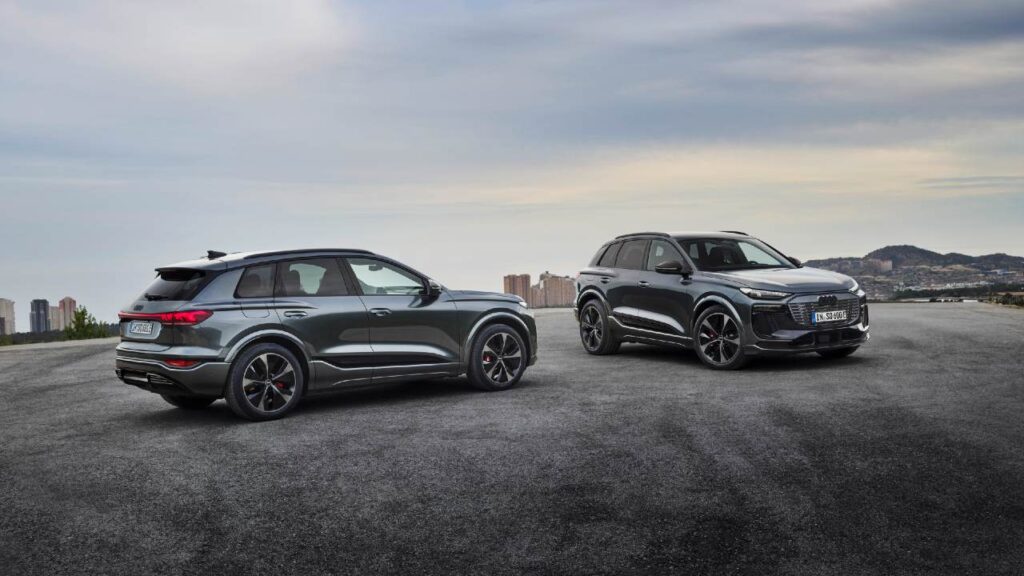
Audi Q6 e-tron Front and Side Profile

All-New Audi Q6 e-tron Quattro Revealed With New Platform

The German carmaker has introduced the new Audi Q6 e-tron on the PPE architecture along with a sporty “S” performance trim. The new Audi Q6 e-tron Quattro has been revealed with a ton of enhancements. It carries upgrades in almost every department including performance, range, charging, driving dynamics and design. It becomes the first production model which utilizes the VW’s PPE (Premium Platform Electric) architecture. There are two iterations – Q6 e-tron and SQ6 e-tron. The prices start at €74,700 ($81,020) and €93,800 ($101,702), respectively. The orders are underway and the deliveries will commence in the Q3 of 2024. You might also like: Taycan Turbo GT Becomes The Most Powerful Porsche Ever Audi Q6 e-tron Quattro Revealed – Specs Both the Q6 e-tron and SQ6 e-tron come with a 100 kWh (94.9 kWh usable) battery pack with 12 modules and 180 prismatic cells. It enables a range of 625 km (388 mi.) on a single charge. At present, these models are available with dual-motor AWD configuration alone. The Q6 e-tron is good for 285 kW (383 hp), whereas the SQ6 e-tron generates 380 kW (510 hp) (with extra boost in short bursts). As a result, the 0 to 100 km/h (62 mph) acceleration comes up in just 5.9 seconds and 4.3 seconds, respectively. Furthermore, the top speeds are rated at a blistering 210 km/h (130 mph) and 230 km/h (142 mph), respectively. The 800-V architecture supports a charging capacity of 270 kW. It allows 255 km (158 mi.) of range recovery in a mere 10 minutes. It takes 21 minutes to go from 10% to 80%. Specs Audi Q6 e-tron Quattro Platform PPE (Premium Platform Electric) Drivetrain Dual-Motor AWD Quattro Battery 100 kWh (94.9 kWh) Range 625 km (388 mi.) Power (Q6) 285 kW (383 hp) Power (SQ6) 380 kW (510 hp) Acc. (0-100 km/h / 62 mph) 5.9 secs (Q6) / 4.3 secs (SQ6) Top Speed (SQ6) 230 km/h (140 mph) 270 kW DC Charging 10% to 80% in 21 minutes Architecture 800 V Cell Packaging 12 Modules, 180 Cells Specs You might also like: Hyundai IONIQ 5 N Starts At $66,100 – How Does It Compare To The Rivals? Audi Q6 e-tron Quattro Revealed – Charging Tech The impressive charging performance of this vehicle relies heavily on intelligent, high-performance, and predictive thermal management. Equipped with Plug & Charge technology, the vehicle self-authorizes at compatible charging stations as soon as the charging cable is plugged in, initiating the charging process automatically. Additionally, charging becomes fully automated. For the first time, if a charging station operates with 400-volt technology, the Audi Q6 e-tron1 can facilitate bank charging. This entails the automatic division of the 800-volt battery into two batteries with equal voltage, allowing them to be charged in parallel at rates of up to 135 kW. Depending on the state of charge, both battery halves are initially equalized before being charged simultaneously. Furthermore, AC charging with capacities of up to 11 kW is feasible at standard home chargers. You might also like: 2024 Dodge Charger Daytona EV Breaks Cover, ICE Still Alive Dimensions The Audi Q6 e-tron slots perfectly between the Q4 and Q8. Its dimensions are indicative of that. Dimensions Audi Q6 e-tron Quattro Length 4,771 mm (15.6 ft) Width 1,993 mm (6.5 ft) Height 1,648 mm (5.4 ft) Wheelbase 2,899 mm (9.5 ft) Boot Compartment 526 L (18.5 cu ft) Dimensions Interior and Features The cabin is minimalistic with tons of modern amenities and tech-savvy functions. Some of the highlights include: You might also like: 1,300 hp BYD YANGWANG U9 Is Ready To Redefine Electric Supercar Segment Learn Electric Cars Says Since the demarcations in the EV market are still not that dense and concrete, there can be multiple rivals to the Audi Q6 e-tron. This includes the likes of traditional competitors like the Mercedes-Benz EQE and BMW iX. However, one could also think of the Porsche Macan EV, Kia EV6, Hyundai IONIQ 5, Genesis GV60, Ford Mustang Mach-E and Tesla Model Y as potential enemies. We shall have to wait for a bit longer for the official launch and deliveries to see how well the customers embrace it.

Lithium Sulphur Batteries For EVs 5 Minutes Charging Time

Lithium-Sulphur Batteries For EVs Promise 5-Min Charging Time

Another day, another potentially ground-breaking EV battery technology! According to a research paper published in Nature Nanotechnology by University of Adelaide researchers, the next-gen Lithium-Sulphur batteries for EVs can be charged in less than 5 minutes. In this type of battery construction, Sulphur cathodes are used due to high energy density and Sulphur’s abundant availability. It can find applications in electronic devices including electric vehicles, as well as power grids. You might also like: New CATL Batteries To Retain 80% Capacity After 12 Years Lithium-Sulphur Batteries For EVs The research paper confirms that the energy density of Lithium-Sulphur batteries is around 550 Wh/kg. This is more than twice what the existing Lithium-ion batteries offer (around 150-200 Wh/kg). Hence, the range of EVs could benefit from using this type of battery exponentially. Note that high-powered Lithium-Sulphur batteries are already being used in mobile phones, laptops and electric vehicles. However, the biggest challenge is the charge-discharge time. It could range anywhere between 1 hour and 10 hours. This is where the breakthrough has been achieved. The researchers analysed the Sulphur reduction reaction which dictates the charge-discharge rate of Lithium-Sulphur batteries. They investigated various carbon-based transition metal electrocatalysts, including iron, cobalt, nickel, copper and zinc during the SRR. The team designed a nanocomposite electrocatalyst made up of clusters of carbon material and cobalt-zinc (CoZn). Senior Author Professor Qiao said, “When the electrocatalyst CoZn is used in lithium-sulphur batteries, the resulting battery achieves an exceptional power-to-weight ratio. Our research shows a significant advancement, enabling lithium-sulphur batteries to achieve full charge-discharge in less than 5 minutes.” This study aims to tackle the problem of these batteries’ slow charge-discharge rates for the first time ever. You might also like: EVs To Be Cheaper To Produce Than Gas Cars By 2027 – Study Learn Electric Cars Says The lower-than-anticipated growth and demand for EVs call for a breakthrough technology to reinstate the trust of the masses in EVs. While there are myriad challenges associated with the mass adoption of electric cars, charging times and infrastructure are among the biggest ones. Hence, if that is resolved, the chances of people opting for EVs will surge significantly. We know that there are potentially transformative technologies being incepted relatively frequently. As industry professionals, we wish to stay updated with all of these. We don’t know which one(s) will emerge triumphant in times to come. It goes without saying that we might see multiple technologies for various markets depending on topography, demand, infrastructure, climatic conditions and affordability.

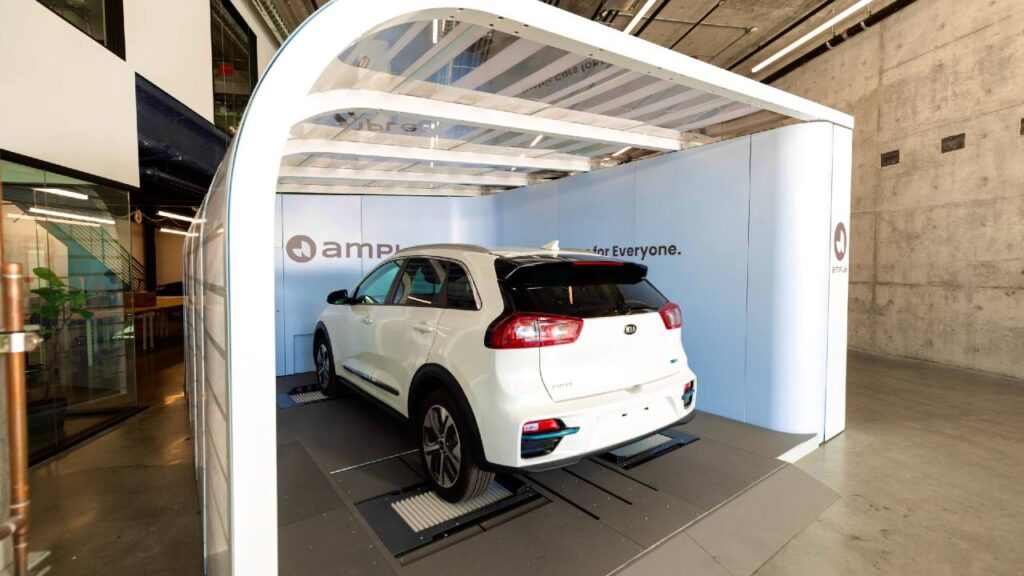
EV Battery Swapping Station

New CATL Batteries To Retain 80% Capacity After 12 Years

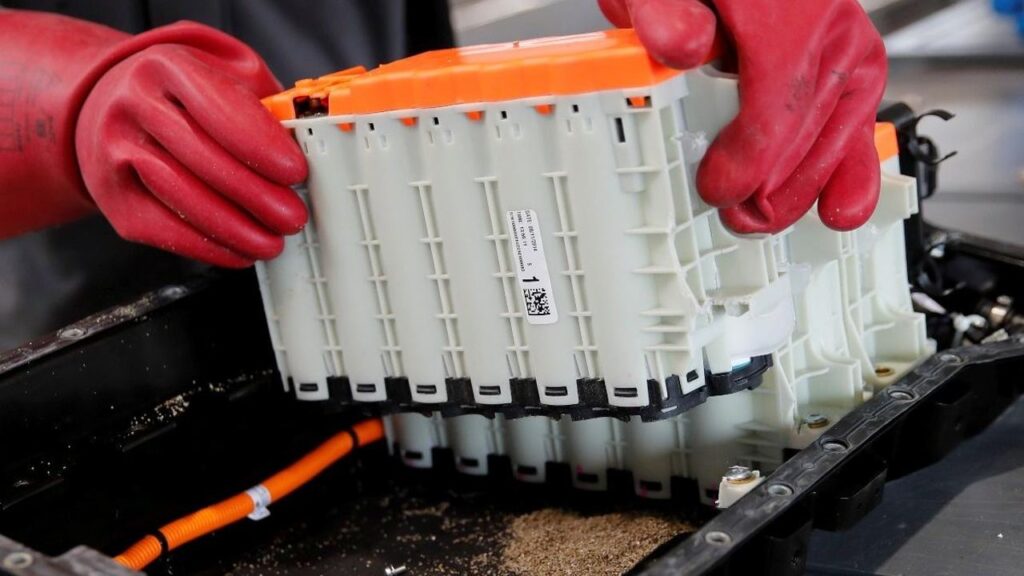
Chinese battery giant CATL and NIO have collaborated to work on new technology that will allow EV batteries to still possess 80% of capacity after 12 years of usage. As per the latest partnership with NIO and CATL, new batteries are being developed with substantially longer lifespans than the existing ones. Battery forms the single most expensive component of an electric car. In most cases, this is around 40% of the total cost of an EV. Moreover, Lithium-ion batteries have a tendency to lose capacity after usage. Hence, most carmakers offer a warranty of around 8 years. Thereafter, the battery replacement costs become a huge issue for EV owners. In order to ensure that the batteries last at least as long as the car (or approximately 10-12 years), Chinese battery giant CATL and NIO have established a partnership. They will co-develop a battery which will be able to retain 80% of its capacity even after 12 years of application. You might also like: EVs To Be Cheaper To Produce Than Gas Cars By 2027 – Study New EV Batteries From CATL and NIO NIO has created a pioneering system for keeping electric car batteries healthy. This system looks after three key factors that affect how long batteries last – temperature, how hard they’re used, and how often they’re charged. By using clever technology and a special way of swapping batteries, NIO has made sure these batteries can last a long time. Thanks to smart planning based on lots of data, NIO’s batteries can keep about 80% of their power even after being used for 12 years. Plus, NIO has worked hard to make batteries that last longer. They’ve studied the materials that make up batteries, like the stuff inside the battery that helps it work, and the liquid it’s filled with. This research has led to better batteries. NIO has become really good at all stages of creating batteries, from making the materials to testing them out. They’ve even got over a thousand patents for their technology. More than a hundred of them focus on making batteries last longer. You might also like: Next-Gen EV Batteries From Korean Giants Unveiled At InterBattery 2024 New Technology By CATL CATL and NIO also believe that between 2025 and 2030, there will be around 20 million electric vehicles which will come out of the warranty period. This doesn’t necessarily mean that the vehicles won’t be in an unusable condition. But the owners will have to shell out a bomb to replace the batteries. To tackle, that CATL has been working on innovative methods to prolong the lifecycle of EV batteries to upto 12-15 years. CATL has created new technology to make battery packs last longer. They’ve invented things like a special Solid Electrolyte Interphase film that can fix itself and add more lithium to batteries. By working together, the companies aim to build a partnership that benefits them both in the long run. These batteries will complement NIO’s battery-swapping business immensely. You might also like: Are EVs With 1000 km Range Still A Distant Reality? Learn Electric Cars Says We are still, essentially, in the first leg of the EV revolution when it comes to battery replacement. The mass-market EV sales only commenced a good couple of years ago. Hence, in the next 5-6 years, we will have millions of cases of battery replacements as the EVs run out of OEM warranty. That will be yet another major hurdle for electric cars to overcome in order to get the trust of potential EV buyers. Therefore, if there is a major breakthrough in this regard prior to that, the entire perception about EVs might change. We can only wait and see how things transpire in this case.

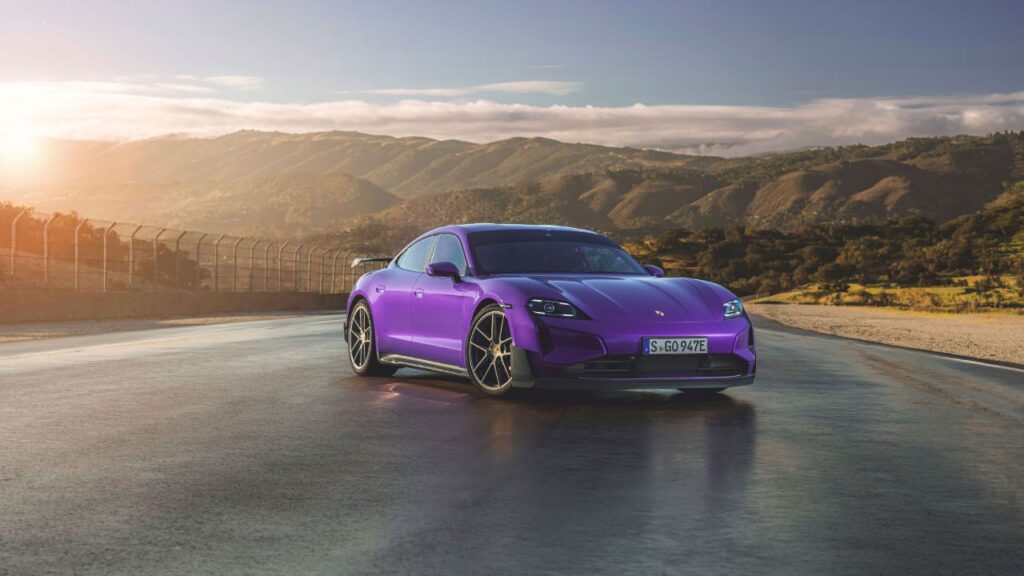
Porsche Taycan Turbo GT Front Three Quarters

Taycan Turbo GT Becomes The Most Powerful Porsche Ever

The Porsche Taycan Turbo GT with Weissach package was crowned the fastest electric series-production car at the Weathertech Raceway Laguna Seca, in California, USA. The Porsche Taycan Turbo GT shattered all records at this Laguna Seca track to post an unprecedented 1:27:87 min lap time. Theoretically, the Taycan Turbo GT, with the Weissach Package, boasts a jaw-dropping 2.2-second sprint time to reach 100 km/h (62 mph) from a standstill. With a generous use of carbon fibre elements, the Taycan Turbo GT weighs a considerable 75 kg less than the Taycan Turbo S. With the track-focused Weissach Package, another 70 kg is shaved off by removing the rear seats, rear speakers and one of two charge ports. You might also like: Porsche Macan EV Specs and Interior Revealed – Gets AR HUD Porsche Taycan Turbo GT – Specs The specs sheet of the Porsche Taycan Turbo GT highlights its engineering prowess. In the absolute top settings with Launch Control and Weissach Package, the total power and torque outputs stand at a spine-chilling 1,093 hp (815 kW) and 1,340 Nm for 2 seconds. This is 74 hp (55 kW) more than the tri-motor Tesla Model S Plaid. Without the Weissach Package, this number drops to 1,019 hp (760 kW) (available for 10 seconds). But in the regular configuration, it generates a decent 778 hp (580 kW). With the Weissach Package, the 0-100 km/h acceleration takes 2.2 seconds, making it the fastest-accelerating Porsche to ever hit public roads. Even without this package, the 0-100 km/h (62 mph) sprint comes up in just 2.3 seconds. The top speed is an exhilarating 305 km/h (190 mph). Even though it seems blasphemous to discuss range figures for a track monster like the Taycan Turbo GT, we would still like to highlight that it offers a range of 555 km on a single charge on a WLTP cycle. Specs Porsche Taycan Turbo GT Power (w/ Launch Control and Weissach Pack) 1,093 hp (815 kW) Power (w/ just Launch Control) 1,019 hp (760 kW) Power (normal settings) 778 hp (580 kW) Acc. (0-100 km/h / 62 mph w/ Weissach Pack) 2.2 seconds Acc. (0-100 km/h / 62 mph w/o Weissach Pack) 2.3 seconds Top Speed 305 km/h (190 mph) Specs You might also like: Rivian R3 Reminds Us Of Hyundai Ioniq 5, R2 Also Spotted Testing Interior and Features Once launched, people will exclusively buy it for its performance. Still, it makes sense to see what the cabin offers. There is black leather upholstery, lightweight full bucket seats, Front Adaptive Sports Seats Plus (with electric 18-way adjustment and memory package), Turbo GT logo embroidered on the front headrests, Steering wheel covered in black Race-Tex with 12 o’clock marking and BOSE Surround Sound System. Most other components are not present in the Weissach Package to save weight. Lightweight Construction and Chassis The main focus to achieve exquisite acceleration is on reducing the overall weight of this monster. As a result, carbon fibre finds use in B-pillars, bucket seats made of CFRP, upper shells on door mirrors, luggage compartment, and the removal of electric soft-closing tailgate function. Other bits to maximize performance include Porsche Active Ride suspension with GT-specific tuning, 21-inch lightweight forged wheels, Porsche Ceramic Composite Brake (PCCB), adaptive spoiler, air deflector elements on the underbody and a new front diffuser and more. You might also like: Hyundai IONIQ 5 N Starts At $66,100 – How Does It Compare To The Rivals? Learn Electric Cars Says Porsche has been able to achieve something truly remarkable with the Taycan Turbo GT. It signifies the zenith of what engineering can develop. Porsche has always been known for pushing the envelope and creating some of the most driving-focused automobiles on the planet. With the electrification of the automobile industry, the German performance car maker wants to ensure that it doesn’t lose its DNA. Let us see how well the potential customers embrace this electric track-decimating monster.

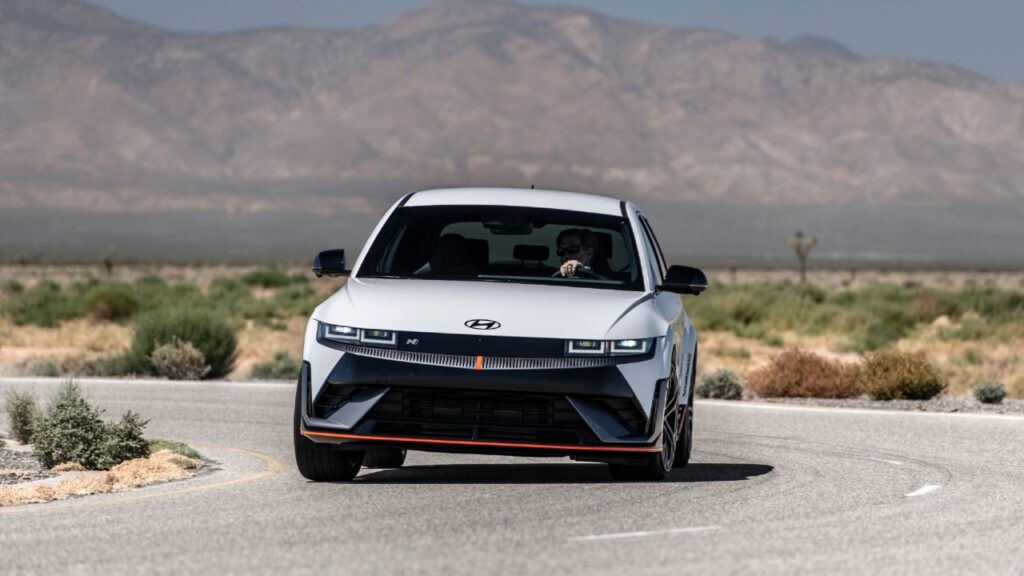
Hyundai IONIQ 5 N Front Profile

Hyundai IONIQ 5 N Starts At $66,100 – How Does It Compare To The Rivals?

Hyundai Motor Company announced the prices of its electric hot-hatch/crossover, the IONIQ 5 N, as we compare these with its rivals. The Hyundai IONIQ 5 N is the performance version of the IONIQ 5. The letter ‘N’ in the Korean carmaker’s nomenclature depicts the performance division. It represents three things – Namyang, Nürburgring and Chicane or tight serpentine turn in the road. Namyang is a district in South Korea where the N brand was incepted. It is the location of Hyundai’s Global R&D Center. Nürburgring is the world-famous racetrack in Germany where most supercars test their performance and post lap times. The N brand was born relatively recently in 2012. And rest, as they say, is history. Fast forward to today, Hyundai offers an N model even in its electric portfolio. You might also like: 7-Seat Hyundai Ioniq 7 Electric SUV To Go Into Production In July – Report Hyundai IONIQ 5 N Price Compared To Its Rivals The fully-equipped top-of-the-line IONIQ 5 N has a retail sticker of $66,100. With the $1,375 destination fee included, the final number comes out to be $67,475. Now, we wish to see how this number stacks up against some other similar products in this niche segment. Car Price Hyundai IONIQ 5 N $67,475 Kia EV6 GT $62,975 Genesis GV60 Performance $70,900 Ford Mustang Mach-E GT Performance $61,885 Tesla Model Y Performance $54,130 Price Comparison It is clear from the table that Hyundai has positioned the IONIQ 5 N rather competitively considering that it is more powerful than the lot. It has a distinct advantage over the luxury sub-brand of Hyundai, Genesis. Mustang and Kia are marginally better priced but the IONIQ 5 N is more promising among the three. It is only the Tesla which will give the IONIQ 5 N a run for its money. But then again, Model Y is the highest-selling EV in the world. It aims to offer performance, practicality and tech-savvy features to its owners. On the other hand, the IONIQ 5 N is truly capable of being called a track monster. You might also like: Hyundai Plans To Launch A Mini Electric SUV And Electric Van Hyundai IONIQ 5 N – Specs Since we are calling it a track monster, let us quickly glance at the kind of specifications it boasts. It is available with a large 84 kWh battery pack which powers two electric motors for an All-Wheel-Drive configuration. In its ‘N Grin Boost’ mode, the total power output stands at a ginormous 641 hp (478 kW) for 10 seconds. This propels the electric hot-hatch/crossover from a standstill to 60 mph (97 km/h) in just 3.25 seconds with Launch Control. In regular mode, the maximum power is still an impressive 601 hp (448 kW). The top speed is electronically limited to 162 mph (261 km/h). These are some supercar territory numbers. In terms of charging, the IONIQ 5 N supports a 350 kW DC charger which can juice up the battery from 10% to 80% in just 18 minutes. It sports 21-inch Pirelli P Zero tires with 275/35 profile. The braking duties are taken care of by a 4-piston front and 1-piston rear disc. Specs Hyundai IONIQ 5 N Battery 84 kWh Electric Motors 2 (AWD) Max Power (w/ N Grin Boost for 10 seconds) 641 hp (478 kW) Max Power (in normal settings) 601 hp (448 kW) Acc. (0-60 mph / 97 km/h) 3.25 seconds Top Speed 162 mph (261 km/h) 350 kW DC Fast Charging 10% to 80% in 18 minutes Specs You might also like: Hyundai To Launch New EV Brand In China; Plans 5 EVs In 3 Years Dimensions Hyundai IONIQ 5 N is a crossover hatchback/SUV and its dimensions represent that. Dimensions Hyundai IONIQ 5 N Length 185.6 in. (4,714 mm) Width 76.4 in. (1,940 mm) Height 62.4 in. (1,585 mm) Wheelbase 118.1 in. (3,000 mm) Dimensions Learn Electric Cars Says We have come so far in the electrification revolution, that carmakers are beginning to launch their traditional performance vehicles with electric powertrains. Sure, the inherent instant torque delivery associated with EVs naturally makes them great-accelerating cars. Still, to think of performance cars with electric hearts is a testament to the progress EVs have made. Now, it remains to be seen how well the customers embrace this legendary nameplate in a futuristic avatar.

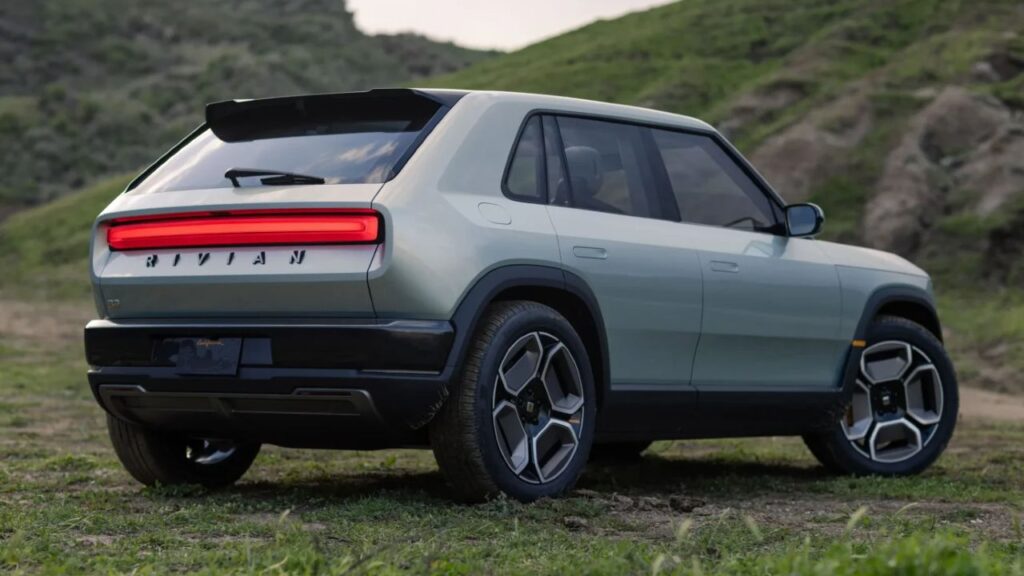
Rivian R3 Rear Profile

Rivian R3 Reminds Us Of Hyundai Ioniq 5, R2 Also Spotted Testing

The upcoming electric SUVs from Rivian have been out and about, creating a frenzy among the onlookers. Rivian unveiled the R2, R3 and R3X SUVs and they were seen testing on the streets soon after. The R2 and R3 will be underpinned by a new mid-size platform. While the R2 is a mid-size electric SUV, the R3 leans more toward the electric crossover demeanour. As an extension, the R3X will be the performance version of the regular R3 for on- and off-road scenarios. As per the latest sightings by netizens, the R2 could remind you slightly of the Hyundai Ioniq 5 in terms of the silhouette. The R2 is planned to go into production in the first half of 2026 at Rivian’s Normal, Illinois plant. The R3 will follow a few months thereafter. The price of the R2 will be around $45,000. Rivian is taking bookings for the R2 with a deposit of $100. You might also like: Rivian R1T Modified For Off-Road w/ 38-inch Tires, 350 mi Range Rivian R3 & R2 Spotted Testing There are many online forums and Instagram and X users who posted the upcoming Rivian electric vehicles being tested out on the road in the flesh. Even though the release is quite far away, the fact that Rivian is testing them sans camo on the roads hints at a timely production. The sharp cuts on the side and rear profiles of the R3 resemble those on the Hyundai Ioniq 5. In fact, the rear third quarter bears a familiar silhouette of the famed Korean EV too. That is not to say that the R3 doesn’t look Rivian. In fact, the overall design is unmistakably Rivian. Rivian R3 & R2 – Specifications Rivian has announced a few key details regarding the specifications of the upcoming R2, R3 and R3X. There will be three motor variants on offer – Single-Motor (RWD), Dual-Motor (AWD), and Tri-Motor (two motors in the rear and one in front). The most powerful configuration will propel the EV from 0 to 60 mph (97 km/h) in under 3 seconds. Furthermore, the battery will comprise an all-new 4695 cell which will deliver over 300 miles (483 km) of range on a single charge for both R2 and R3. In terms of charging, the R2 and R3 will be capable of DC fast charging using both NACS and CCS (with adapter) sockets. The time to charge from 10% to 80% will be less than 30 minutes. Specs Rivian R2 and R3 Variants Single-Motor (RWD), Dual-Motor (AWD), and Tri-Motor (AWD) Cell Specification All-new 4695 Range > 300 miles (483 km) Acc. (0-60 mph / 97 km/h) < 3 seconds DC Fast Charging 10% to 80% in less than 30 minutes Charger NACS and CCS (with adapter) Specs You might also like: After Ford & GM, Rivian Agrees to Use Tesla’s Supercharger Network Interior And Key Features The cabin will utilize sustainable materials for upholstery, seating and other areas. R2 will even come with the option of folding the first and second rows completely flat for gear, cargo or camping. Additionally, there will be the latest connectivity and storage facilities inside the cabin. To aid the active safety prowess of the EV, the R2 and R3 will possess 11 cameras, 5 radars, and a more powerful computing platform for enhanced autonomous capabilities. Over-the-air software updates will be available too. More details will emerge closer to the launch. Founder’s Note On the occasion of unveiling R2 and R3, Rivian Founder and CEO, RJ Scaringe commented, “I have never been more excited to launch new products – R2 and R3 are distinctly Rivian in terms of performance, capability, and usability, yet with pricing that makes them accessible to a lot of people. Our design and engineering teams are extremely focused on driving innovation into not only the product features but also our approach to manufacturing to achieve dramatically lower costs. R2 provides buyers starting in the $45,000 price range with a much-needed choice with a thoroughly developed technology platform that is bursting with personality. I can’t wait to get these to customers.” You might also like: 2024 Dodge Charger Daytona EV Breaks Cover, ICE Still Alive Learn Electric Cars Says With Rivian R1 already on sale, a need for a more affordable product was there in order to cater to the masses. The R2, with a $45,000 price tag, will be the perfect candidate to tap into that market segment. Mid-size SUVs will be the way forward to increase revenues and profits for the American EV giant. We shall keep an eye out for more details about these two new products as they emerge.

Global EV Sales January 2024

8 Out Of Top 10 Highest Selling EVs Are Chinese

The list of highest selling EVs in January 2024 across the globe is out and the Chinese dominance is on full display. As per the latest global EV sales data by EV Volumes (part of J.D. Power), as many as 8 electric cars out of the top 10 highest selling EVs come from Chinese carmakers. Whether we like it or not, the Chinese automobile market drives the trends in global automotive sales. As a matter of fact, China contributed more than 60% to the total global EV sales in January 2024. That is a staggering statistic. Note that we are only discussing BEVs (Battery Electric Vehicles) in this post. You might also like: Canada And Australia Join Hands To Tackle China In EV Battery Tech Top 10 Highest Selling EVs Since it takes some time to collect data from across the globe, the sales for January have been confirmed. The sales of BEVs surged by a significant 48% on a year-on-year basis, while that of PHEVs (Plug-In Hybrid Electric Vehicles) witnessed an exponential 91% jump. That latter is down to the massive popularity of PHEVs in China. Note that most PHEVs in China are REVs (Range Extended Vehicles) which typically have a significant 30-40 kWh batteries. These are capable of fast charging too. Here is the list of the top 10 pure EVs in January 2024: You might also like: 1,300 hp BYD YANGWANG U9 Is Ready To Redefine Electric Supercar Segment Top 5 EV Carmakers In January 2024 While the individual EV models are exciting, it also makes sense to keep track of the carmakers overall. After the last quarter of 2023, it will always be fascinating to see BYD and Tesla collide for the number 1 spot. At least for the first month of 2024, the Chinese counterpart has the lead. Here are the top 5 carmakers in the world in terms of EV sales: You might also like: EV Makers Reconsidering Their Ambitious Plans, Was Toyota Right All Along? Learn Electric Cars Says As automobile aficionados and reporters, it excites us to keep track of the latest trends in the global automotive industry. Analyzing trends and anticipating the immediate future is what drives us. It is looking imminent that electric vehicles are here to stay for the long run. Sure there are still innumerable challenges that need fixing along with government assistance. Still, with time, things are bound to get better (charging infrastructure, affordability, battery technology, etc.) to facilitate mass adoption. The signs for this year look promising as confirmed by the actual EV sales numbers. Let us see how things pan out in the coming months.